How to Tell if Gold Is Real: Marks, Tests, and Photo Clues
Learn practical visual clues, photo tips, limitations, and next steps for how to tell if gold is real before using the app as a first pass.
Updated June 2, 2026
What is possible
If you searched for how to tell if gold is real, start by understanding what you can reasonably learn from sight and a few simple at-home checks. Visual inspection and basic non-destructive tests can separate likely solid gold from obviously plated or base-metal costume jewelry. That helps you decide whether to stop, keep, or escalate to a stronger test (acid, XRF, or lab assay).
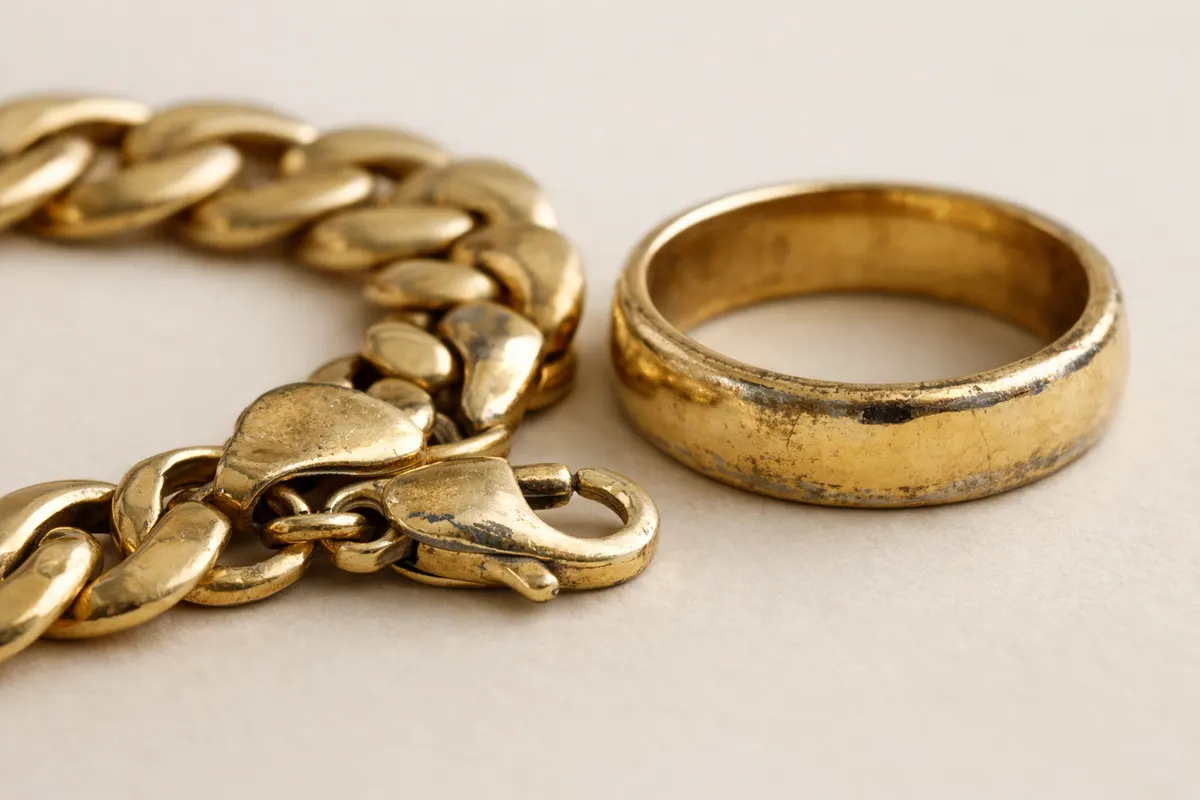
Using photos—close-ups of hallmarks, clasps, edges and wear points—a reliable app or a jeweler can document marks and surface clues. Photos can show stamped numbers (for example 14K, 585, .750), surface wear that reveals a different metal underneath, or signs that a piece is thinly plated. Those observations are useful first-pass evidence but not proof of purity.
Simple home checks, like a magnet test (to spot ferrous metals) and a weight/size comparison for the expected heft of gold, provide additional clues without damaging the item. Combined with clear photos of stamps and edges, these steps let you triage which pieces should get a professional gold test and which are clearly costume or plated.
The goal of these first steps is practical: reduce risk. If you're buying, selling, insuring, or valuing a piece, use visual and lightweight tests to inform the next, definitive step rather than to make a final judgment by themselves.
What is not possible
Photos and casual at-home checks cannot prove purity or value. No image, no photograph-based tool, and no casual magnet or density test can replace a chemical or instrumented assay. Never treat a photo-based inspection as definitive for selling, insuring, or certifying a piece.
Home acid tests and kits can damage plated items, change finishes, or abrade delicate settings. They also require skill to interpret results accurately, and even a correct acid reaction only approximates karat levels. For anything that matters financially or sentimentally, a professional test (XRF or fire assay, depending on context) is required.
App-based visual matching or hallmark recognition can misread worn or altered stamps, confuse plated vermeil with genuine solid gold, and cannot detect alloy composition (for example copper mixed with gold to change color). Treat photo clues as directional: they lower uncertainty but do not eliminate it.
Visual clues
Start by photographing and inspecting every visible hallmark and stamp. Common stamps that indicate gold content include: 24K or 999 (.999), 22K, 18K or 750 (.750), 14K or 585 (.585), and 10K or 417 (.417). American stamps often use K (karat) while European marks use parts per thousand (for example 750 for 18K). Also look for manufacturer marks, country marks, and date codes—these help with provenance though they don’t prove purity.
Look for plating indicators. Thin gold plating commonly shows wear where friction occurs: inner edges of rings, clasps, the underside of chains, jump rings, and bezel edges on settings. If a different base metal shows through (silver tone, copper, or white metal), it’s likely plated. Vermeil pieces will show a sterling silver core with a gold wash and are usually marked “vermeil” or “sterling” alongside a gold marking; plated costume jewelry often uses abbreviations such as GP, GEP, RGP, HGE or terms like "gold tone."
Examine color, weight, and edge behavior. Solid gold has a consistent color across edges and in worn areas; redder hues suggest higher copper content, greener tones suggest added alloys or brass. Gold is dense: for a given size, real gold feels heavier than many base metals or hollow pieces. On rings, a quick heft comparison to a known gold band can be revealing, but remember that hollow construction or thin solid gold will change expectations.
Check clasps and construction details. Higher-quality gold jewelry tends to have integrated clasps, soldered jump rings, and consistent finishing inside and out. Costume or plated pieces often have cheaply attached clasps, glued stones, visible seams, or rough soldering. For chains, check the end-links and collars where stress concentrates; plating often wears fastest there.
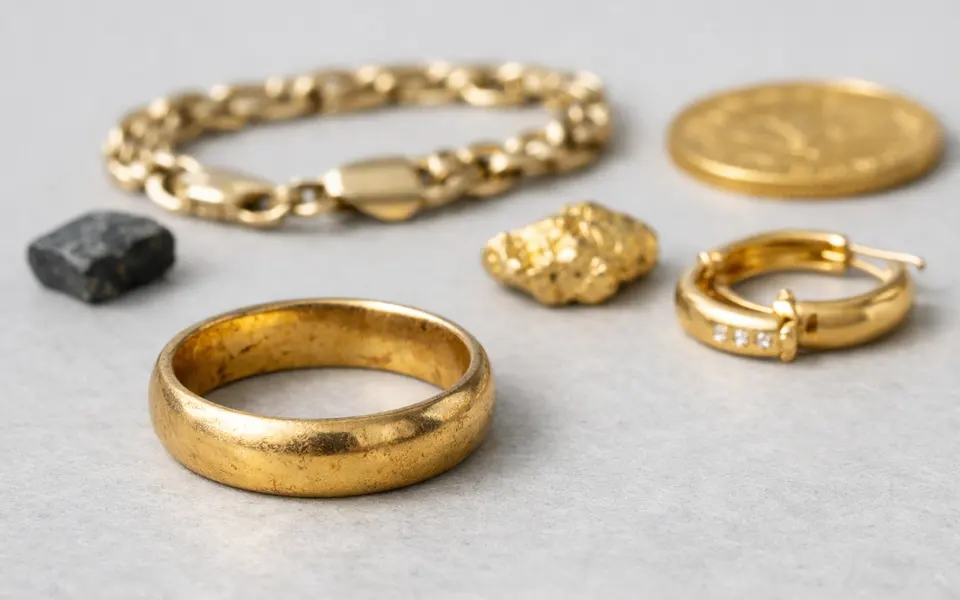
Photograph the piece for documentation: take a macro shot of the hallmark, a side shot of the shank or edge where plating might wear, a shot of the clasp and jump ring, and an overall photo for shape and dimensions. Use diffuse daylight, a neutral background (gray or white), and include a small ruler or a coin for scale. These photos help both apps and human experts spot telltale signs and reduce misreading of worn stamps.
- Primary keyword: how to tell if gold is real.
- Reader intent: Learn safe at-home clues that help separate real gold, plated jewelry, and fakes before using a photo tool or professional test.
- Recommended CTA angle: Use the app to document marks and compare visual clues, then verify valuable pieces with a proper gold test.
Verification path
Decide the level of verification based on value and risk. For low-cost fashion jewelry, the visual clues above and a simple magnet check may be enough to classify something as costume. For pieces with historical, emotional or monetary value, move quickly to professional verification. If the piece will be sold as gold, used as collateral, insured, or if authenticity impacts safety (for example, some plated jewelry can contain toxic base metals), prioritize accurate testing.
Non-destructive professional options: XRF (X-ray fluorescence) machines read surface alloy composition and are widely used by reputable jewelers and pawn shops. XRF is fast, typically non-destructive, and gives a trusted estimate of alloy content—though it samples only the area exposed to the X-ray beam and can be fooled by plating thicker than the beam penetration. For high-value items, ask for a documented XRF report.
Destructive or confirmatory laboratory tests: fire assay (cupellation) and other chemical methods give the most accurate measure of gold content but require removing material from the piece and are used when full certainty is needed (for example in estate sales or high-value appraisals). Discuss options with a certified assay lab before consenting, because destructive tests alter or damage the item.
Home kits and acid tests: acid test kits are inexpensive and available for estimating karat, but they carry hazards—sulfuric or nitric acid can damage stones, patina, plating, and metal, and require careful handling and disposal. If you use a kit, practice on known samples first, follow safety directions, and treat results with caution. When in doubt, stop and refer the item to a jeweler or assay office.
Where to go: choose an independent, reputable jeweler or assay service with positive reviews and clear reporting. If a free or low-cost test is offered at a pawn shop or market stall, remember convenience may cost accuracy or independence. Ask whether the test is XRF or acid, whether a written result is provided, and whether the operator has experience with vintage or plated items.
Use the app after checking the visual clues
Document clear photos of hallmarks, clasps, edges and any worn areas using the Jewelry Identifier app as a first pass. The app helps you compare visible marks and surface clues quickly; after that, verify anything that matters financially or for safety with a proper gold test (XRF, fire assay, or an experienced jeweler). Treat app-based results as directional—use professional testing when the answer affects money, insurance, or provenance.


Frequently asked questions
Can a photo prove that gold is real?
No. A high-quality photo can show hallmarks, surface wear, plating, and construction details that strongly suggest whether a piece is likely solid gold or plated, but it cannot prove metal purity. Photos are excellent for documentation and triage—useful before a professional test—but they don’t replace XRF, fire assay, or other instrumented methods when you need a definitive answer.
Are hallmarks always reliable?
Hallmarks are helpful but not infallible. Stamps can be worn, re-stamped, counterfeited, or altered. Some makers mis-mark pieces intentionally. Use hallmarks in combination with wear patterns, weight, and professional tests. If a hallmark is the only piece of evidence for a high-value claim, seek an independent assay.
Is the magnet test enough to tell if gold is real?
The magnet test is a quick, non-destructive check that can detect ferromagnetic base metals (steel, iron) used in some fake jewelry. Real gold is not magnetic, so a strong attraction indicates a non-gold component, but a lack of attraction does not prove the item is gold—many non-magnetic base metals and alloys will pass the magnet test.
How can I test gold at home without damaging a piece?
Start with non-destructive steps: photograph hallmarks, inspect edges and solder joints for different metals, compare weight to a known gold item of similar size, and perform a magnet test. If you need more certainty, avoid home acids on plated or sentimental pieces—ask a jeweler for XRF or a reliable local assay service. If you do use an acid kit, practice on known samples, protect stones and settings, and accept that results are only estimative.