

How to Identify a Ring From a Photo: What Ring Is This?
Wondering what ring is this? Learn how to identify a ring from a photo: read the stone, setting, band, and hallmark clues, avoid common mistakes, and know when to verify.
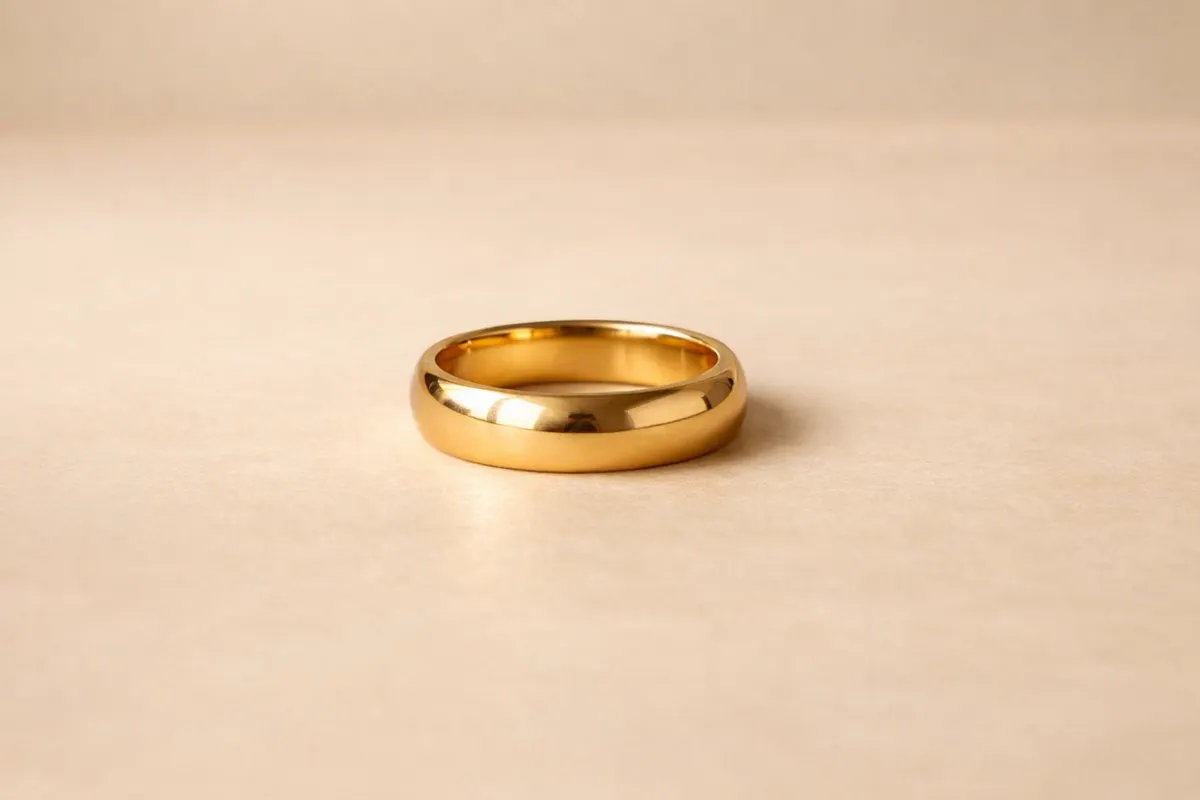
What a ring photo can help you identify
A clear ring photo can give you a useful first read on the ring style, visible stone color, setting shape, band design, and any markings that appear on the inside of the shank. That is enough to narrow down whether you may be looking at an engagement ring, signet ring, class ring, wedding band, vintage-inspired piece, fashion ring, or gemstone ring.
A picture cannot prove metal purity, gemstone authenticity, carat weight, or appraisal value by itself. Those questions need testing, documentation, or a qualified jeweler. The best way to identify a ring from a photo is to turn the visible clues into a focused starting point, then verify the details that matter.
How to take a better photo before you identify the ring
The quality of the image matters more than most people expect. A blurry, dark, or reflective photo can hide the exact clues needed to identify a ring accurately.
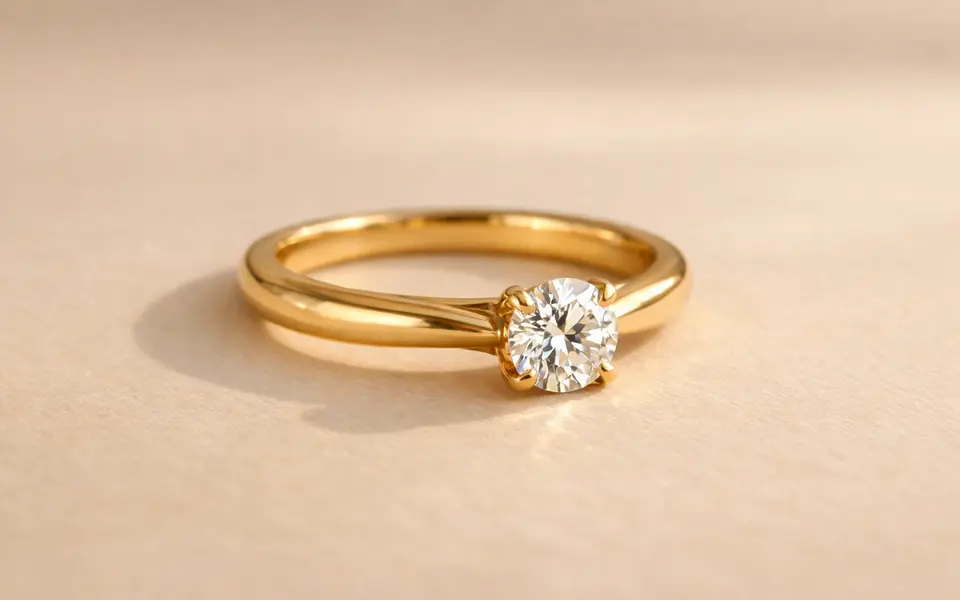
- Place the ring on a plain, non-reflective background.
- Use bright natural light or soft indoor light instead of harsh flash.
- Take one full-ring photo from above and one from the side.
- Capture the inside of the band if there are hallmarks, stamps, initials, or numbers.
- Tap to focus on the stone and setting before taking the picture.
- Avoid heavy zoom because it can soften important details.
Start with the ring shape and style
Begin with the overall silhouette. Engagement rings often emphasize a center stone, while wedding bands usually have a simpler continuous band. Signet rings tend to have a flat face or engraved top. Class rings often include school, year, or emblem details. Vintage and antique rings may show older setting styles, engraving, milgrain edges, or more ornate metalwork.
This first step does not give a final answer, but it quickly narrows the search. If the ring has a large center stone with smaller stones around it, terms like halo ring, cluster ring, solitaire ring, or three-stone ring may be useful search angles.
Look at the stone, setting, and metal clues
The stone color, cut, and setting are often the strongest visual clues. A clear round center stone may suggest a diamond or diamond alternative, but a photo alone cannot confirm the material. A deep blue stone could be sapphire, glass, spinel, or another gemstone depending on context. Treat the visual match as a clue, not proof.
The setting can also help. Prongs, bezels, channels, pavé rows, and cathedral shoulders each point to different design families. Metal color matters too, but yellow, white, and rose tones can be affected by lighting and camera processing.
- Stone shape: round, oval, pear, emerald, cushion, princess, marquise, or heart.
- Setting type: solitaire, halo, bezel, cluster, channel, pavé, three-stone, or tension style.
- Band details: plain, engraved, twisted, split shank, rope, filigree, or signet face.
- Metal color: yellow, white, rose, two-tone, or plated appearance.
Check hallmarks and stamps inside the band
If the inside of the ring has a stamp, take a separate close photo of it. Common marks can include metal purity numbers, maker marks, brand stamps, country marks, or ring sizes. Examples such as 925, 10K, 14K, 18K, PT, PLAT, or S925 can provide useful context, but worn or fake stamps are possible.
When a stamp is hard to read, try rotating the ring under light and taking several close-up images. Even a partial mark can improve the identification brief you give to an app, jeweler, or appraiser.
Use AI for a fast first pass, then verify important details
An AI ring identifier can compare your photo against visual patterns and return likely categories, style terms, and visible clues. That is helpful when you do not know what words to search for or when you want a quick starting point before doing deeper research. If you want a ring identifier by picture right now, the free Ring Identifier tool on this site (under Free Tools, at /tools/ring-identifier) gives a first-pass read in the browser.
For insurance, resale, inheritance, gemstone authenticity, or metal purity, confirm the result with a professional appraisal or lab-supported testing. AI can help organize what is visible in the photo; it should not replace expert verification when money or authenticity is involved.
Common ring types you can narrow down from a photo
Most ring photos can be sorted into a few practical groups before deeper identification. The goal is to find the category that best matches the visible design, then look for the details that make the ring more specific.
- Engagement ring: usually centered around one main stone or a halo design.
- Wedding band: often simpler, continuous, and designed for daily wear.
- Signet ring: usually has a flat or engraved top surface.
- Class ring: often includes emblems, dates, initials, or school details.
- Vintage-style ring: may include engraving, filigree, milgrain, or ornate settings.
- Gemstone ring: built around a colored center stone or multiple accent stones.
Common mistakes when identifying a ring from a photo
Most wrong identifications come from a handful of repeatable mistakes rather than rare edge cases. The most common one is treating metal color as proof of metal type. Warm indoor light can make white metal look yellow, and camera processing can push yellow gold toward rose. Color is a clue about finish, not a verdict about purity, and plated pieces photograph exactly like solid ones.
The second mistake is reading the center stone by color alone. A clear round stone might be a diamond, moissanite, white sapphire, cubic zirconia, or glass, and all five can look identical in a phone photo. The setting quality around the stone usually says more than the stone itself: fine claw prongs, crisp pavé rows, and clean finishing suggest a piece worth verifying, while glue-set stones and rough castings usually point to fashion jewelry.
The third mistake is trusting a stamp without context. Stamps can be worn to illegibility, struck shallowly on plated pieces, or faked outright. A 925 or 14K mark raises the odds but settles nothing on its own, and the absence of a stamp does not make a ring worthless — many older and handmade rings were never marked.
- Do not judge metal type from color in a single photo; lighting shifts yellow, white, and rose tones.
- Do not assume a clear stone is a diamond; lookalikes photograph identically.
- Do not treat a purity stamp as proof, or a missing stamp as proof of the opposite.
- Do not identify from one angle; the side profile and inside band often decide the call.
- Do not skip the wear points; plating loss on edges and high spots changes the story.
Compare your photo against documented examples
Once you have a shortlist, the fastest way to test it is against documented examples of identified rings rather than store listings. Retail photos are lit and retouched to sell, while documented identification examples show the same clues you are working with: uneven light, worn edges, partial stamps, and real proportions.
Work clue by clue instead of matching the overall look. Confirm the setting family first, then the stone shape, then the band construction, and only then the marks. When your ring matches an example on three or four independent clues, the identification is far stronger than a single overall resemblance. The identification examples on this site follow that structure, so you can line your photos up against each clue in turn.
Related guides
Need help with a ring photo?
Scan a clear picture with Jewelry Identifier By Picture to get a fast visual starting point, then use the checklist above to verify the details that matter.
Take the next step →Frequently asked questions
Can I identify my ring from a picture?
Yes, a clear picture can help identify visible style, setting, stone color, shape, and markings. It cannot prove gemstone authenticity, metal purity, or appraisal value without professional testing.
Which ring photos make identification easier?
Take a full-ring photo, a side photo of the setting, a close photo of the stone, and a close photo of any stamps inside the band. Good lighting and a plain background make the result more useful.
Can a picture prove real gold or a real diamond?
A photo can show clues such as color, setting style, and visible stamps, but it cannot confirm real gold, diamond authenticity, carat weight, or value. Those details require testing or documentation.
What should I do if the ring has no markings?
Use the ring shape, stone appearance, setting, band design, and any wear patterns as visual clues. If the ring may be valuable, ask a jeweler or appraiser to inspect it in person.
How do I find out what type of ring I have?
Start with the silhouette to place it in a family such as engagement ring, wedding band, signet, class ring, or gemstone ring. Then narrow the type using the setting style, stone shape, band construction, and any inside-band marks, and compare against documented examples of identified rings.
Can someone identify a ring just from a description?
A written description helps, but a clear photo is far stronger because setting details, proportions, and wear patterns carry most of the identification signal. If you can, share a full-ring photo, a side view, and a close-up of any stamps along with your description.