Jewelry Identification
Jewelry Authentication: Photo Clues and Verification Steps
Explore jewelry authentication through marks, settings and wear. Learn what photos can suggest and which claims need professional testing or documentation.
Jewelry authentication asks whether a claim about a piece is supported: its material, gemstone, maker, age or origin. These are separate questions. A ring may resemble a period style without having been made in that period, and a visible metal stamp does not establish every material in the piece.
A photograph helps document what you have and decide which question needs a closer examination. Record the item type, visible marks, construction, wear and any paperwork. Describe a yellow surface as yellow-toned until its composition is established; a photograph alone cannot confirm metal purity, gemstone identity, maker attribution or value.
This guide organizes the evidence to gather before requesting verification. For a hands-on first-pass photo assessment, use the jewelry identifier tool linked below. For valuation questions, the separate Jewelry Appraisal guide explains what to prepare: https://jewelry-identifier.app/identify/jewelry-appraisal.


How identification works
Step 1
Snap a photo
Take a clear, well-lit photo of your item in the Jewelry Identifier By Picture app.
Step 2
Get an instant identification
The app reads the visible clues and returns the closest matches in seconds.
Step 3
Review the details
Compare the result with your photo, review any uncertainty, and check the suggested next steps.
Photograph the evidence without altering the piece
Begin with the whole piece on a plain surface in diffuse light. Add close views of any mark, clasp, stone setting, back and damaged area. Keep the original files so a specialist can inspect details without filters or sharpening artifacts. A ruler alongside the piece supplies size context without implying an accurate weight.
Transcribe marks exactly, including unclear characters. Treat a partial stamp as partial rather than completing it from memory. Photograph where the mark sits as well as the mark itself: a replaced clasp or component may not describe the rest of the piece.
Avoid cleaning, scratching, bending or applying acids to reveal a result. If a material test is needed, ask an appropriate professional which method suits the piece and what it can establish. Photographs and any receipts or reports are useful starting records.
- Color and wear: record changes in tone and exposed layers. Lighting, coatings and repairs can complicate their interpretation.
- Construction: photograph seams, joints and fasteners. A seam alone does not establish age, quality or authenticity.
- Marks: capture the full mark and surrounding component. A readable stamp remains a claim to verify.
- Settings: record the outline and how the stone is held. A style can be copied in several periods and materials.
- Paperwork: keep reports, receipts and seller descriptions together, noting which specific item each document describes.
What the photo tool can contribute
Jewelry Identifier returns a written first-pass brief about visible category, material and gemstone clues, style, condition and possible next checks. Use it to organize observations and identify missing views. It does not authenticate a maker, certify metal purity or provide a laboratory gemstone report.
Read any suggested identity alongside the explanation. If a result describes a mark or feature that is unreadable in your image, leave that claim unresolved. A clear 18K stamp is useful to document, but a photograph of the stamp does not test the metal or establish that the mark is genuine.
Different questions require different evidence. Material identification may require a jeweler or gemological laboratory, while a maker or period attribution can require construction details and documentary research. GIA describes its laboratory identification process here: https://www.gia.edu/gem-lab-how-gia-identifies-colored-stone. A photo assessment is a preparation step for that work.
- Keep observations separate from conclusions: visible mark, possible interpretation, and what still needs checking.
- Ask which examination would answer your actual question before commissioning a service.
- Keep authentication and appraisal questions distinct; identifying a material does not establish a selling price.
- The web tool supplies written observations and next checks, not annotated image overlays, specialist referrals or guaranteed testing costs.
Lookalike situations that need closer examination
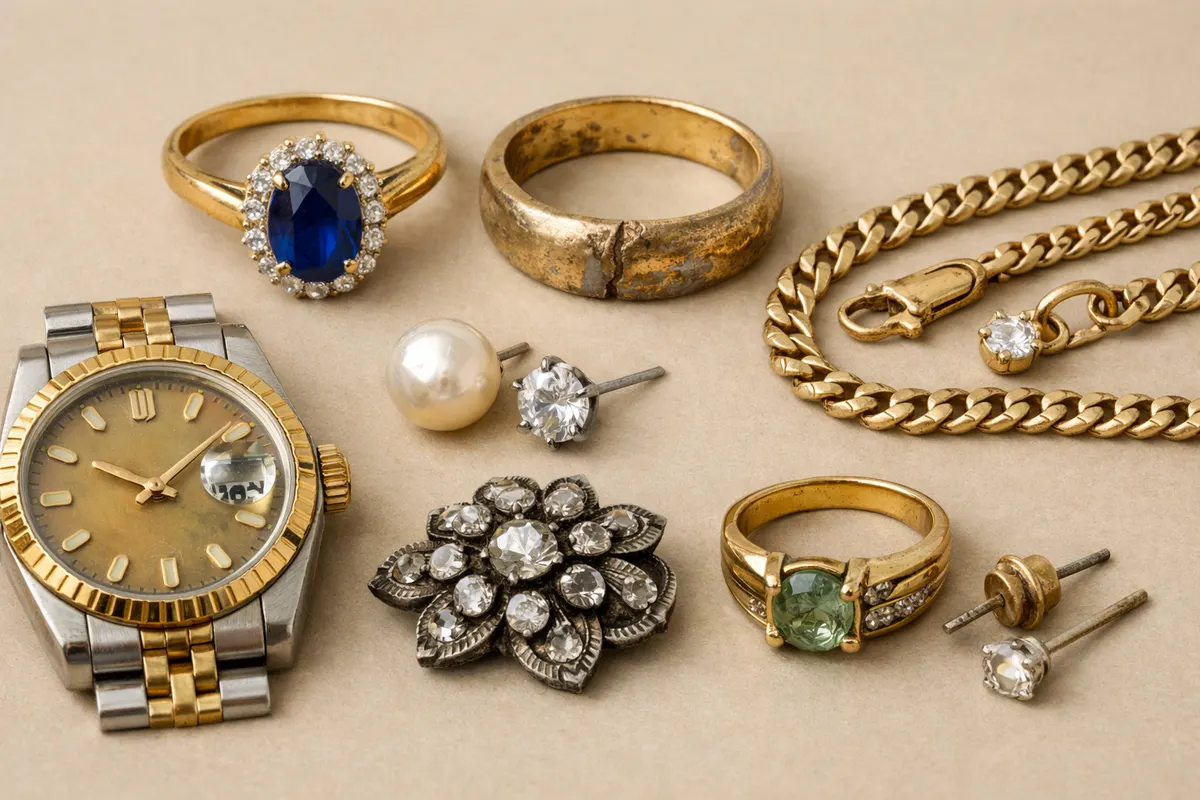
Consider these illustrative situations rather than authenticated case studies. A modern floral brooch can resemble an antique design; a yellow-toned surface can cover a different base material; and a transparent stone can resemble several gems or glass. Similar appearance is a reason to compare evidence, not proof of deception.
For Georgian jewelry or another period style, distinguish a description of the design from a claim about the date of manufacture. Photograph the front and back, attachment points and repairs, then ask a suitably experienced specialist what supports the proposed date. Handcrafted appearance on its own is not a date certificate.
- An apparent plating boundary: record it in clear light and request material testing if the composition matters.
- An unusual or poorly struck mark: record it without declaring it counterfeit from the photograph alone.
- A stone with bright reflections or an apparent bubble: ask for gem identification instead of deciding natural, synthetic or glass from one image.
- A seller claim without supporting evidence: ask what the claim covers and how it was established before treating it as verified.
Frequently asked questions
Is jewelry authentication the same as an appraisal?
They address different questions. Authentication examines a claim such as material, maker or age; an appraisal addresses value for a stated purpose. If you need an insurance or resale assessment, tell the appraiser that purpose and ask what identification or testing is needed first. A photo-based estimate is not a substitute for the required examination.
What should I gather after buying estate jewelry from an auction or dealer?
Keep the listing, invoice, stated attribution and any accompanying reports. Photograph the whole piece, marks and condition before making alterations. Note which claims remain unverified, then seek the relevant specialist for those questions. Neither an estate-sale description nor an app match establishes provenance on its own.
Can a photo reliably detect counterfeit jewelry?
A photograph can reveal inconsistencies worth investigating, but it can also hide decisive details. Marks, wear and settings are starting observations. Avoid treating a blurred stamp, seam or unusual reflection as proof of a counterfeit. Confirmation depends on the particular claim and may require testing, records or a specialist examination.
Does a photographed hallmark prove metal content?
No. A mark may be misread, altered, copied or attached to a component that differs from the rest of the piece. Photograph it clearly and record its location. Ask a qualified professional how to verify the material if the result matters; do not attempt a destructive test merely to confirm an app suggestion.
Related guides
Take the next step with Jewelry Identifier
After documenting the piece, use https://jewelry-identifier.app/tools/jewelry-identifier for a written first-pass identification brief. Compare its observations with your photos and use unresolved questions to prepare for a jeweler, appraiser or laboratory examination.