

How to Tell If a Ring Is Real: Stamps, Metal and Stone Checks
Learn how to tell if a ring is real with practical stamp, metal and stone checks you can do at home or from photos, plus when to seek professional verification.
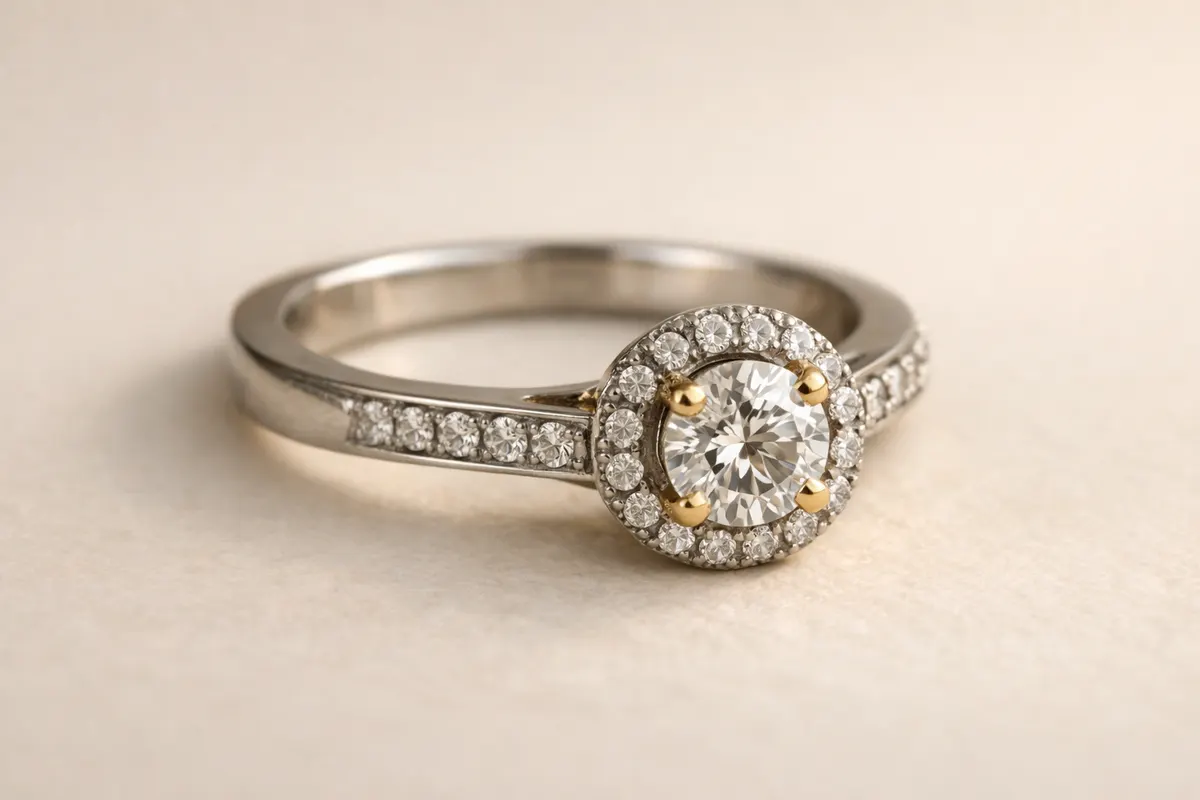
Quick answer: how to tell if a ring is real
How to tell if a ring is real starts with visible, verifiable clues: readable hallmarks or stamps, consistent wear patterns on the metal, and stone appearance that matches the claimed material. Stamps such as 14K, 750, 925, or a maker’s mark are useful first clues but aren’t definitive on their own. Photographs that clearly show these marks help, but stamps can be faked or re-stamped on counterfeit pieces.
A practical quick-check routine: look for a clear stamp or hallmark, inspect edges and settings for plating wear or adhesive residue, evaluate stone sparkle and inclusions under a loupe or with a phone camera, and check weight and ring thickness against what a genuine item should feel like. If multiple strong clues point to authenticity, you can be moderately confident; if evidence conflicts or is missing, plan a verification step with a trusted jeweler or lab.
- Readable hallmarks (e.g., 14K, 18K, 925) are a strong first clue but not proof by themselves.
- Evenly worn metal, not concentrated flaking, suggests solid metal rather than thin plating.
- Stone behavior under magnification (inclusions, facet wear) helps separate real stones from common imitations.
- Photos matter: good lighting, close-up of the stamp, and a scale or ruler increase what can be judged from an image.
What 'real' means for a ring: metal and stone
When people ask how to tell if a ring is real they are usually asking two separate questions: is the metal what it claims to be, and is the stone genuine? A ring described as “real gold” typically means the band is solid gold of a declared karat, while a “real diamond” usually means a natural or lab-grown diamond rather than a synthetic simulant like cubic zirconia or glass. Each claim is a different kind of test: metal can be evaluated by weight, markings, and reactivity, while stones need optical and physical inspection.
Real can also imply commercial value or intended use: heirloom pieces described as real may have historical construction methods (hand-forged shanks, closed-back settings) while costume jewelry will often use base metals with gold- or silver-colored plating and glued-in stones. Photographs can suggest whether a ring’s construction matches a claim, but they cannot replace metallurgical assays or gemological reports when precise value, treatment, or origin matters.
- Metal: hallmarks, weight, and wear patterns indicate whether a ring is solid precious metal or plated.
- Stone: luster, facet crispness, and internal features (inclusions) distinguish many real gems from lookalikes.
- Construction: solder joints, prong style, and setting type add context about authenticity and age.
- Provenance: receipts, maker marks, and estate history strengthen claims but must be verified.
Visible clues that help confirm a ring is real
Start with the band stamps and hallmarks. Common stamps include karat marks (9K, 14K, 18K), fineness numbers (375, 585, 750), and silver marks like 925 or sterling. Maker’s marks and assay office symbols appear on higher-end pieces and provide traceable evidence. If a stamp is present but poorly struck or inconsistent with the ring’s construction, treat it with caution—counterfeiters sometimes add marks to imitate value.
Next, examine metal wear and color. Solid gold wears evenly and keeps a consistent hue through wear areas; gold plating will often show a different base metal color (usually gray or copper) at high-contact spots like the inner shank or bezel edge. Look for flaking, thin exposed lines, or sudden color changes under magnification—those are indicators of plating rather than solid metal.
Stone clues matter too. A genuine diamond typically shows sharp facet junctions and high sparkle with both white and colored light return; many simulants show broader flashes and a different scintillation pattern. For colored stones, check for natural inclusions and irregular color zoning under magnification. Glue remnants, rough bezel edges, or visibly chipped facets are common with glued-in faux stones.
Contextual evidence is also useful: provenance documents, original receipts, or consistent maker marks make a stronger case for a ring’s claim. Conversely, an oddly low price, lack of paperwork, or a description that avoids specifics are red flags.
- Hallmarks to look for: 925, sterling, 375, 585, 750, 9K, 14K, 18K.
- Wear clues: consistent patina suggests solid metal; exposed base color suggests plating.
- Stone signs: crisp facet edges and natural inclusions point toward real gems; smooth, gas-bubble-like inclusions often indicate glass.
- Construction marks: solder seams, hand-engraving, and well-set prongs support authenticity.
Step-by-step: checking a ring at home and from photos
Prepare your workspace before you start—good light, a clean surface, and a magnifier or smartphone macro lens. For photos, use daylight or a daylight-balanced lamp, steady the camera, and include a millimeter ruler or coin for scale. Begin by photographing the entire ring in profile, then take close-ups of the stamp inside the shank, the underside of the setting, and the stone face at multiple angles.
Read the stamp and compare it to standard marks. If the stamp reads 925, 14K, or 750, note it and photograph it clearly. If the stamping is absent, worn away, or looks hand-engraved in an odd font, that’s important context—the absence of a hallmark doesn’t mean the ring isn’t real, but it does lower the confidence of a remote assessment.
Inspect the inner band and worn edges with a loupe. Record the stamp exactly as it appears and note any change in surface color. Weight and magnet response alone cannot establish metal content. Leave chemical testing to a jeweler who can choose a method suitable for the metal, finish and setting.
- Photo checklist: full profile, inside shank with stamp, underside of setting, macro of stone, and a scale item.
- Home checks: non-magnetic test, weight comparison, and visual inspection under magnification.
- Avoid acids and harsh chemicals at home—these can damage plating and alter finishes.
- If uncertain, seek a local jeweler for a non-destructive test or send high-quality photos to a trusted service for a preliminary read.
Examples
Example 1 — A thin band with a faint “14K” stamp, no maker mark, and bright white metal showing at the inner shank: this often indicates a hollow or plated ring claimed as 14 karat. The bright base color at contact points usually means an underlying base metal; the stamp may be genuine on a plated item or added after the fact. Further checks: weigh and compare thickness, and look for solder marks that indicate repair or modification.
Example 2 — A ring with a clean “925” stamp, a subdued patina, and a cultured pearl with natural surface irregularities: most likely a sterling silver setting with a real cultured pearl. Pearls set in sterling typically show drilled holes with smooth edges made by a jeweler; glued-in faux pearls often show excess adhesive or rough seat edges. For value claims, check for maker’s marks and provenance.
Example 3 — A chunky ring with a bright, well-cut stone that flashes lots of color but shows no inclusions under 10x magnification and is very lightweight: this is frequently a simulant such as cubic zirconia or glass. Real diamonds and many natural colored stones display specific inclusion patterns, sharper facet junctions, and heft appropriate to their material. When photos show too much uniform brilliance and lack of internal features, suspect a lookalike.
Example 4 — An antique-looking ring with hand-engraved details, closed-back settings, and a partially worn maker’s punch: these construction details commonly indicate an older, possibly genuine piece. Antique construction, however, does not always equal precious metal or gemstones—some vintage costume jewelry was built to high standards. If the ring appears to be antique and valuable, seek an in-person appraisal with provenance documentation.
- Thin shank + color change at contact = likely plated, not solid.
- 925 + natural pearl surface irregularities = typical sterling pearl setting.
- Very uniform brilliance + low weight = common sign of simulants like CZ.
- Antique construction details can support age claims but require provenance for value.
Limits of photo checks and when to verify professionally
Photos and home checks can raise or lower your confidence about a ring, but they cannot provide legal proof of authenticity or exact market value. Many critical details—metal alloys, treatments (bleaching, filling, plating), or the presence of gem enhancements—require specialized tools and lab testing. For example, a lab can distinguish natural diamonds from high-quality lab-grown stones, and an assay or X-ray fluorescence (XRF) test can reliably identify metal composition without cutting the piece.
When to seek professional verification: if the ring has significant sentimental or monetary value, if you plan to insure, sell, or use the ring as collateral, or when a photo-based assessment leaves conflicting clues. Trusted professionals include a reputable local jeweler with non-destructive testing equipment or a recognized gemological laboratory for certificates. Be cautious about low-cost “instant” online authentication services that don’t disclose their methods—ask what tests they perform and whether results are backed by a known lab.
Separate the types of uncertainty: low-confidence uncertainty means photos are too blurry, stamps unreadable, or obvious plating; medium-confidence uncertainty means some clues point one way while others conflict; high-confidence uncertainty means the ring has traits that only lab equipment can resolve, such as treated gems or alloy mixtures. When in doubt, document everything—clear photos, noted stamps, purchase receipts—and choose a verification path that matches the value and risk.
- Photo and visual checks are informative but not definitive—lab tests confirm composition and treatments.
- Seek a professional for insurance, sale, or high-value inheritance questions.
- Ask any service what specific tests they run (XRF, refractometer, microscopic analysis) before paying.
- Document stamps, provenance, and your photos to support any future appraisal or lab report.
Related guides
Next step: use a structured pre-check and consider Jewelry Identifier’s real check
If you want a reasoned next step after these checks, use the Jewelry Identifier Real Check for a photo-based, evidence-focused pre-check (https://jewelry-identifier.app/tools/real-check). Treat the tool as a first-pass aid: gather clear photos—full profile, inside shank with any stamp, underside of the setting, and a close-up of the stone with a scale—then run the pre-check to see which visible clues align with authenticity. If the result is unclear or the piece may be valuable, follow up with a local jeweler or a gem lab for formal verification.
Take the next step →Frequently asked questions
Is my ring real if there’s only a faint stamp and no paperwork?
A faint stamp alone does not prove a ring is real, but it is relevant evidence. Stamps can wear away with time, especially on thin shanks, and old hand-stamped marks may look faint. However, counterfeiters can also add or alter stamps. Combine the faint stamp with other checks—consistent wear, weight appropriate for the claimed metal, construction quality, and clear close-up photos of the mark. If uncertainty remains, take the ring to a reputable jeweler for a non-destructive test or request an XRF assay for accurate metal composition.
I bought a ring online—how do I know is this ring real or fake before I accept it?
Before accepting an online purchase, request clear, high-resolution photos showing the full ring, a close-up of any hallmarks or stamps, the underside of the setting, and a photo with a scale (ruler or coin). Look for consistent metal color, well-formed prongs, and natural-looking stone characteristics under magnification. Check the seller’s description for specific details and any return policy or third-party grading. If the seller can’t provide convincing photos or refuses returns, treat the item as higher risk and consider professional authentication after receipt or returning the piece.
Can magnet or weight tests at home tell whether my ring is real?
Magnet and weight tests are useful quick screens but not definitive. Most precious metals (gold, silver, platinum) are non-magnetic, so if a ring strongly attracts a magnet it likely contains magnetic base metals. Weight comparisons can indicate whether a ring is hollow, plated, or solid—precious metals feel heavier than many base alloys of the same size. Both methods can give you useful information when combined with stamps and visual inspection, but they cannot replace professional tests like XRF for metal composition or gemological assays for stones.
When should I pay for a professional authentication or lab report for a ring?
Pay for professional authentication when the ring has significant monetary or sentimental value, when you plan to insure or sell it, or when visual and photo checks leave conflicting signals (e.g., a clear hallmark but suspicious construction). If you need a formal, market-accepted certificate—such as for diamonds or high-value colored stones—choose a recognized gem lab. For metal composition questions, ask for non-destructive XRF testing. Always confirm costs and what tests are included in any professional service before committing.