

Jewelry Makers Marks Database: How to Look Up and Read Marks
Practical guidance for using a jewelry makers marks database: what photos to take, how to interpret results, and next checks before you rely on an ID.
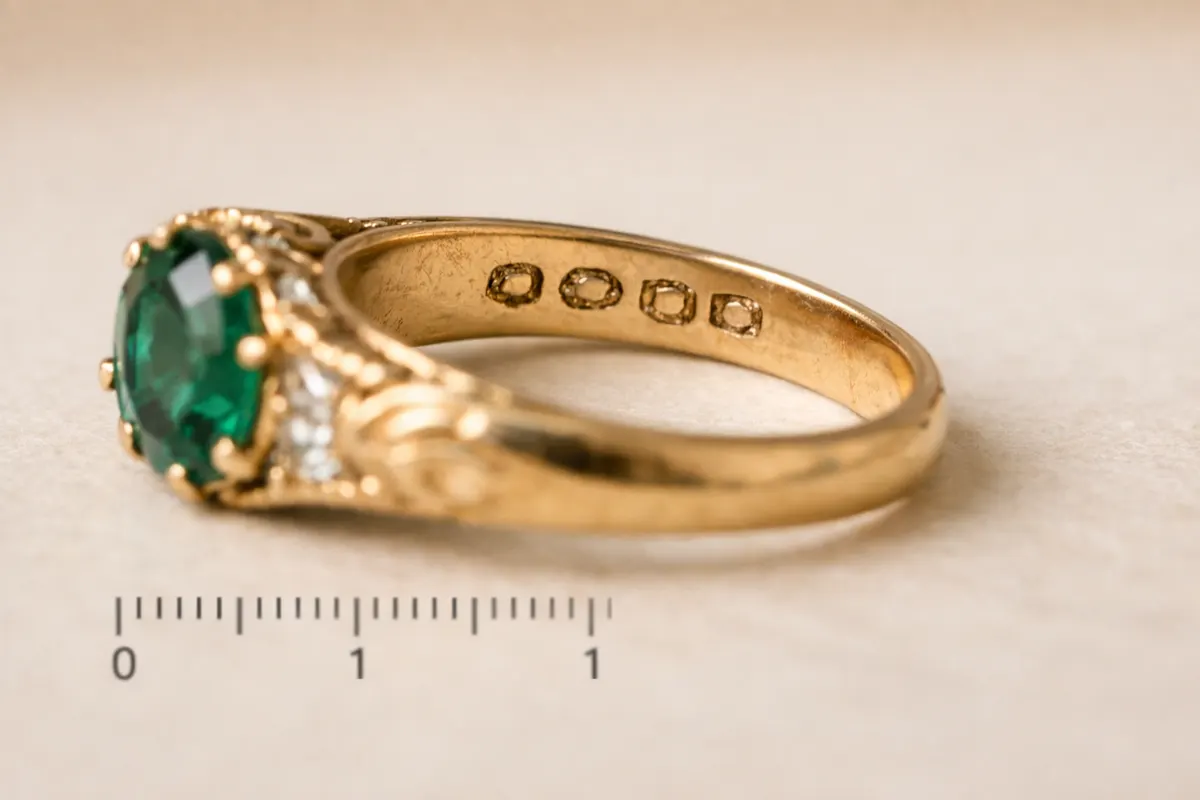
Quick answer: jewelry makers marks database in one look
A jewelry makers marks database is a reference of stamped maker marks, logos, and company names that helps you match a clear photograph of a mark to a recorded maker. When a database returns a close visual match, it points you toward plausible makers and date ranges—but a match from a photo alone is rarely definitive proof of origin or value.
Use a database as a fast first pass: photograph the mark, note nearby hallmarks or assay marks, and compare the stamp shape, lettering style, and punctuation to the database entry. The strongest results come from combining a mark match with corroborating clues like construction style, setting techniques, and metal testing.
If the database match looks promising, follow up: cross-check with a published hallmarks reference or the site’s identification guides, and consider a professional appraisal or lab test for precious-metal content before assigning monetary value or declaring an item authentic.
- A makers-mark match narrows possible makers and eras but is not proof of authenticity by itself.
- Best practice: clear macro photos, note surrounding stamps (assay, purity), and document construction details.
- Use the database result to guide further checks: style, setting, metal tests, and provenance will raise confidence.
What a jewelry hallmarks database does
A jewelry hallmarks database collects stamps applied to pieces by makers, factories, and assay offices. These resources usually list maker names, emblem shapes, registered dates, and jurisdictions where the mark was used. Searching such a database helps transform a tiny stamped symbol into a set of research leads: maker name possibilities, likely country, and an approximate production era.
Not all databases are created equal. Some specialize in specific countries (for example British assay office registers), specific eras (Victorian, Art Deco), or categories (silverware vs. costume jewelry). Many entries show sample images, transcriptions, and contextual notes—like whether a maker used the same stamp on multiple product lines, or whether similar stamps were later copied.
The phrase jewelry hallmarks database also signals practical scope: hallmarks include assay marks and purity stamps that tell you metal content and legal testing jurisdictions, whereas maker marks identify who produced the piece. A single database can include both types, but interpreting them together gives the clearest picture.
- Hallmarks = assay/purity and sometimes date letters; maker marks = company logos or initials.
- Country and era context matters: the same initials can belong to different makers in different places or times.
- Quality varies: prefer databases with sourced images, registration dates, and jurisdiction notes.
Key clues a database search needs to succeed
A high-quality match depends on what you can photograph and record. The single most important clue is an undistorted, in-focus close-up of the mark under raking light so recessed or punched letters contrast with surrounding metal. Include a scale (ruler or coin) and a note about where the mark sits—inside a band, on a clasp, under a stone setting, or on a plate.
Surrounding stamps are equally important. Photograph any purity numbers (like 925, 750), assay office symbols, date letters, and country marks. These corroborating stamps narrow possibilities: for example, a maker’s initials plus a British assay mark and a letter date reduces candidates to makers registered in that assay region and era.
Construction and finish clues often confirm or contradict a mark-based attribution. Note solder quality, joint types, setting style (bezel, prong, collet), and whether components are machine- or hand-finished. Make and repair traces can show whether a mark is original or added later.
- Photograph the full item, then the area with the mark, then an extreme close-up with scale.
- Record purity marks, assay symbols, and any date letters present.
- Note metal behavior: wear patterns, plating loss, or patina that affect stamp legibility.
- Capture details of clasps, jump rings, and hinge construction—these are often maker-specific.
Step-by-step workflow to use a jewelry makers marks database
Step 1 — Prepare the piece for photography and inspection. Clean gently with a soft brush and dry; avoid chemicals that could damage porous gems or delicate finishes. Use a simple macro setup (smartphone with macro lens or a dedicated loupe camera) and steady the piece against a dark, non-reflective background. Take layered shots: full item, mid-distance of the area, and extreme close-up of the stamp with scale.
Step 2 — Record contextual notes. Write down visible numbers, letters, and shapes exactly as you see them, including punctuation or special characters (for example, a dot between initials or an encircling cartouche). Note where the mark sits (e.g., inside ring shank near maker’s solder line) and any other stamps that appear within 1–2 centimeters.
Step 3 — Search databases methodically. Start with national and specialist registries for the likely jurisdiction (assay offices, silver/gold registries), then use broader maker-mark aggregators. Use image comparison where available and search transcriptions for variants (for instance, search 'W&R' and 'W & R'). If the site returns multiple candidates, compare sample images, registration dates, and known production types.
Step 4 — Cross-check non-mark evidence. Compare the piece’s style, setting techniques, and common manufacturing methods to documented examples of candidate makers. If metal purity is relevant, do a non-destructive metal test or seek a lab assay—mark matches without metal confirmation leave commercial claims uncertain.
Step 5 — Decide next steps based on confidence. A clear image plus consistent hallmarks, style, and metal tests raises confidence; record the sources you used. If uncertainty remains, consult a specialist for verification, or use the tool at /tools/jewelry-identifier as a research pass to gather additional photographic comparisons before paying for testing.
- 1: Photograph, including a scale and raking light.
- 2: Transcribe marks precisely and log location on the piece.
- 3: Search specialized registries first, then aggregator databases.
- 4: Cross-check with style and metal tests before asserting origin.
- 5: Escalate to expert verification when financial or legal stakes exist.
Examples: typical searches and what a database can show
Example 1 — A sterling chain with small initials inside a cartouche: You photograph the interior link, capture a clear 'JH' inside a curved rectangle, and note a '925' nearby. A makers-mark database returns several 'JH' entries; the assay mark and cartouche shape point to a small English workshop active 1920–1940. Combined with the chain’s solder style and clasp type, you can reasonably narrow to one or two makers and look for labeled examples in period catalogs.
Example 2 — An unsigned paste brooch with an impressed logo: The database shows a close visual match to a manufacturer’s punch used by a known costume-jewelry firm from the 1950s. Here the mark plus typical molded settings, base-metal plating, and rhinestone setting techniques support a manufacturer attribution, but the item’s low market value means you generally won’t need lab testing.
Example 3 — A ring with an odd punched symbol and no purity stamp: A database match suggests a continental maker but lacks assay confirmation. In this case the mark is a clue to provenance but not to metal content; a non-destructive XRF or an acid test by a jeweler can confirm whether the metal matches the maker’s reported practice. Databases help prioritize such tests by narrowing which labs or specialists are most relevant.
- Sterling silver with assay marks: database + hallmarks = strong lead toward maker and date.
- Costume jewelry logos: databases can often identify manufacturers without metal testing.
- Unmarked metals: maker matches are suggestive but require metal testing to support value claims.
Limitations and when a database result is not enough
Databases are research tools, not verdicts. A visual match may reflect a reused stamp, a contemporary reproduction, or a copied logo. Copies and later re-stamps are common enough that a database hit should prompt corroborating checks: metal assay, construction analysis, documented provenance, and comparison to authenticated examples.
Confidence tiers help: high-confidence outcomes combine a clear maker mark plus matching assay/purity stamps, period-appropriate construction, and stylistic agreement. Partial confidence occurs when a mark matches but one or more corroborating clues are absent. Low confidence happens when the image is unclear, marks are altered, or many makers used similar initials.
When financial, legal, or conservation decisions depend on the attribution, stop at the database match and seek professional verification. Use the database result to direct the verification—narrowing which assay office records, auction comparables, or museum examples to consult saves time and money. The database should always be one evidence stream among several.
- High confidence: clear maker mark + matching assay and consistent construction.
- Partial confidence: maker mark match without metal or style confirmation.
- Low confidence: unreadable mark, ambiguous initials, or evidence of re-stamping.
- Verify with lab assays or a trusted specialist when stakes are monetary or legal.
Related guides
Use a photo-first research pass to narrow possible makers
After you collect clear photos and database leads, consider a focused photo-identification pass with Jewelry Identifier at https://jewelry-identifier.app/tools/jewelry-identifier. Use it as one practical step to compare images, catalog candidate matches, and prioritize follow-up tests or expert appraisal. The tool is a research aid—not a substitute for lab assays or professional verification—but it can shorten the list of likely makers so your next steps are more efficient.
Take the next step →Frequently asked questions
Where can I search a jewelers mark database when I only have a photo?
Start with national and specialist registries that cover the likely jurisdiction (for example British assay records for UK items). If the jurisdiction is unknown, use aggregated maker-mark sites that accept image uploads or side-by-side comparisons; then filter candidates by any assay marks you find. Keep a log of the databases you checked, the search terms used, and screenshots of candidate matches—this makes later expert review faster. Remember that a photo-based match guides further checks but does not replace metal testing or professional verification.
How reliable is a database match if the piece has a purity number?
A purity number (like 925 or 750) paired with a maker mark raises confidence because assay stamps and purity marks are independently applied and harder to forge consistently with a maker’s registered punch. Still, check that the purity mark matches known local formats and is not a modern added stamp. A non-destructive metal test is the best method to confirm the stamped purity; use the database match to decide whether testing is worthwhile.
Can a jewelry makers marks database tell me a piece’s market value?
No. Databases help identify makers and era, which are factors in valuation, but they do not calculate market value. Value depends on condition, provenance, metal content, gem quality, rarity, and current market demand. After a maker attribution, consult auction records, recent sales of similar pieces, and a qualified appraiser for an accurate valuation.
If I find conflicting matches in a jewelry hallmarks database, what should I do next?
Treat conflicting matches as a signal to gather more evidence: retake photos under different lighting, look for tiny supplementary stamps, and record construction details. Cross-reference the conflicting candidates’ known production methods and date ranges. If the piece still fits multiple makers, use metal testing or consult specialists who handle items from the relevant era or region to break the tie.