

Silver Hallmarks: Sterling, 925, Maker, and Country Clues
Learn which silver hallmarks a photo can reliably show, which marks are weak signals, and practical next steps to narrow maker, purity, and country clues.
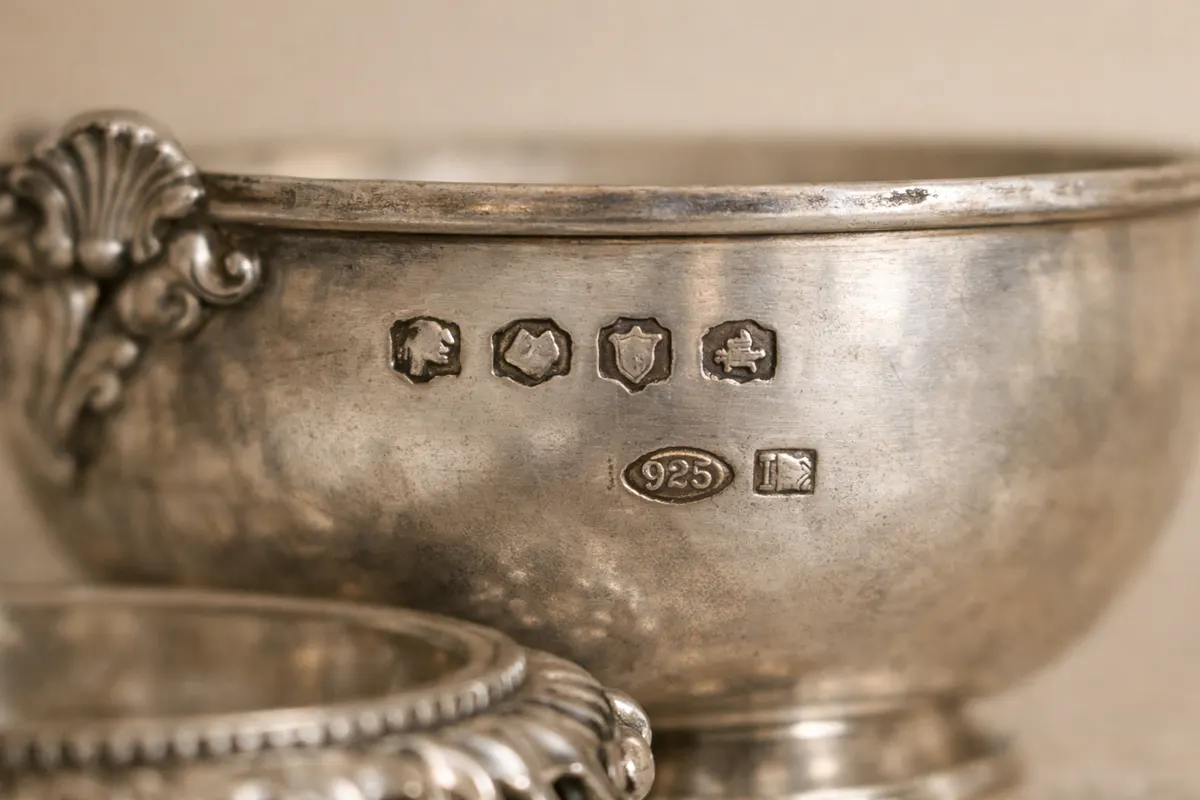
Quick answer for silver hallmarks
Silver hallmarks visible in photos can often point you to useful shortlist items: a stamped number like 925 or “sterling” is a strong indicator of 92.5% silver content, a maker’s initials inside a shaped cartouche can narrow possible workshops, and assay office symbols or country-specific icons can suggest origin. These marks are usually clear enough in a well-lit phone photo to guide initial research.
What a photo cannot do reliably is certify age, confirm exact purity beyond what the stamp implies, or prove value and authenticity on its own. Wear, re-stamping, plating, or counterfeit stamps all exist, so a picture-based identification should be treated as an informed hypothesis, not a final appraisal.
A practical first pass with silver hallmarks is therefore: photograph every mark from multiple angles, read and transcribe visible stamps, compare those stamps with reference guides, and then use a measured next step (catalog lookup, assay records, or professional testing) when the outcome matters. That approach balances what visual clues can show with the limits of a single image.
- Strongest photo clues: numeric purity marks (925), clear maker initials, and official assay symbols.
- Limits of photos: exact purity, age, and monetary value require testing or paperwork.
- Practical workflow: photograph, transcribe, compare, then escalate uncertain cases to testing or experts.
Most reliable visible clues on silver hallmarks
Start by locating and photographing every mark. The most durable and useful clues are the stamps and shapes themselves: numeric purity stamps such as “925” or the word “STERLING” are direct signals that the maker intended a 92.5% silver standard. Even when scratched or partially worn, these marks usually survive and can be read in close, well-focused photos.
Assay office marks and national symbols are the next-best clues for country origin. For example, British pieces often carry a lion passant alongside an assay office mark (Leopard’s head for London, an anchor for Birmingham). Other countries use distinct icons — French marks, Russian zolotnik numbers, or Spanish stamps — and these can narrow origin quickly when visible. If you see both a numeric stamp and an assay symbol, treat them together: a matching combination strengthens the inference.
Maker’s marks — initials, pictorial logos, or unique cartouches — are powerful when you can match them to a registry or catalog. Many workshops used consistent initials with specific shapes (rectangles, ovals, shields) which collectors’ databases and hallmark books index. In photos, maker marks are often small; use a macro or zoomed-in, oblique-lit shot to capture the engraving outline and surrounding shape for identification.
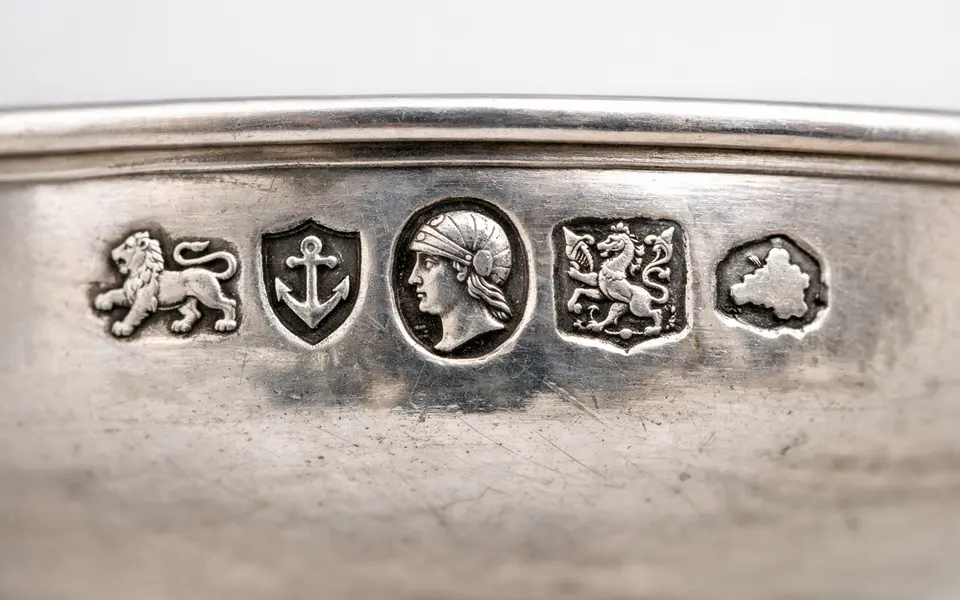
- 925 or STERLING: strong indicator of 92.5% silver content when clearly stamped.
- Assay symbols (office marks, national icons): help narrow country or legal standard.
- Maker’s marks and cartouches: best used with a catalog or database match.
- Date letters and serial stamps: helpful when present; treat single date letters as supportive, not decisive.
Weak signals
Color and shine are poor clues for silver. Photos can’t reliably show exact hue or luster differences between sterling, plated silver, and white alloys. Tarnish patterns or surface wear sometimes suggest age but can equally result from storage conditions or polishing frequency. Do not assume a piece is solid silver just because it looks “right” in a photo.
One-angle shots, glare, and shadows can turn a legitimate mark into a false positive or make an absent mark appear present. Reflections often mimic engraved numerals, and stamped marks near a curved surface can distort when photographed straight-on. Always photograph stamps from two or three angles with diffuse light to confirm their shape.
General stylistic cues — filigree style, clasp type, or overall design — are useful context but weak alone for origin or purity. Many designs were copied across countries and decades. Similarly, maker initials without a clear cartouche or supporting assay mark are ambiguous; initials can repeat across makers and eras, so avoid declaring a maker based on initials alone.
- Color, sheen, and tarnish: unreliable indicators of purity.
- Single-angle photos and glare: common causes of misreading stamps.
- Style or design alone: often copied across makers and geographies.
- Small or partial initials: treat as leads, not confirmations.
How to compare hallmarks to reach a short list
Use a layered comparison: read and transcribe every stamp first, then group clues by type. A basic grouping might be: purity marks (numbers or words), assay or country symbols, maker’s marks, and date or serial stamps. Put the clearest, least ambiguous marks first (numeric purity and assay icons), then add maker marks and style clues to refine possibilities.
Next, consult reference sources. For purity and 925 explanations, a targeted article like “What Does 925 Mean on Jewelry? Silver Stamps, Plating, and Next Checks” can clarify stamping conventions and common plating tricks (you can find that reference at https://jewelry-identifier.app/blog/what-does-925-mean-on-jewelry-silver-stamps-plating-and-next-checks). For broader appraisal context, compare findings with established posts such as “Jewelry Appraisal: Visual Clues, Examples, and Safe Next Steps” (https://jewelry-identifier.app/identify/jewelry-appraisal) when you need to decide whether to escalate to testing.
When reference checks produce multiple candidates, prioritize matches that satisfy at least two independent clues: for example, a 925 numeric stamp plus a matching assay office icon and maker cartouche fits more reliably than a maker initial alone. Create a ranked shortlist with notes on what each candidate would imply (country, expected silver standard, and likely time period) and what further evidence would move that candidate higher — a clear date letter, paperwork, or a test result.
- Step 1: Photograph and transcribe every visible mark before handling.
- Step 2: Prioritize numeric and assay symbols; these are least ambiguous.
- Step 3: Cross-check maker marks with catalogs and authoritative references.
- Step 4: Require at least two matching clues before leaning toward a conclusion.
App workflow
After you’ve photographed and transcribed marks, use a visual-identification app as a research amplifier rather than a final judge. Uploading (or scanning within an app) clear macro photos of each stamp can quickly surface similar match candidates, maker mark databases, and reference images that would otherwise take hours to find. Treat app suggestions as leads to confirm rather than confirmations themselves.
When you receive results from an app, compare its top matches against your photographed clues. Good matches will align on two or more independent markers: the same numeric stamp, the same assay symbol, and a consistent maker cartouche or style. If the app proposes a country or date, check whether that result is backed by an expected assay mark or a known regional hallmark practice.
Finally, label uncertain matches in your notes and treat them as research items. If the piece might be valuable or historically significant, move to documented verification: request professional testing or provenance research. The app helps you reach that decision faster by turning visual clues into a concise shortlist, but do not rely on an app alone for legal or high-stakes judgments.
- Use the app to compare photographed marks with hallmark databases and image matches.
- Require app matches to align with at least two independent clues before trusting them.
- Treat app output as research leads; escalate to testing or expert appraisal for high-stakes items.
- Keep clear photos and transcriptions so you can share consistent evidence with experts.
Related guides
Try Jewelry Identifier after you photograph the marks
Once you’ve photographed each stamp and transcribed the marks, use Jewelry Identifier on your phone to turn those clues into a short, researchable list. Treat the app’s suggestions as leads: confirm matches that align with two or more independent hallmarks, and escalate uncertain or high-value items to testing or a qualified appraiser. Jewelry Identifier helps you move from photos to a focused next step—keep your images clear, note which marks were decisive, and use the results as part of your research notebook.
Take the next step →Frequently asked questions
What does “925” or “sterling” mean on silver jewelry?
A clear 925 or the word STERLING stamped on a piece indicates the maker intended the item to meet the sterling silver standard (92.5% silver). In photos, this is one of the strongest single clues but not a professional purity test: plating and aftermarket stamps exist, so treat the 925 mark as a reliable lead that still benefits from corroborating marks or testing if the exact purity matters.
Can maker initials alone identify the maker or country?
Maker initials are useful but often ambiguous on their own because different workshops can share initials and styles. A confident identification usually requires the initials plus a cartouche shape, an assay office symbol, or historical reference linking those initials to a known maker. Use initials as a narrowing tool, not as definitive proof.
Which country hallmarks are easiest to spot in photos?
Countries with regulated assay systems tend to show the clearest photographic signals: British marks (lion passant plus assay office icons), French assay heads, and some Russian zolotnik numbers are examples. These national marks are standardized and appear in predictable locations, which makes them easier to recognize in close, well-lit images. Always cross-check the symbol with a hallmark reference to avoid misreading regional variants.
My photo shows tarnish and wear—can that help date the piece?
Tarnish and wear give context but are weak dating tools because environmental factors and cleaning can dramatically change surface condition. Use wear patterns as supporting context—consistent wear at joints or hinge pins suggests age-related use—but rely on dated marks, assay office date letters, or documentary provenance for more accurate dating. When in doubt, list wear as supportive evidence rather than conclusive proof.