Diamond Identification
Diamond Identification — What to Look For, With Real Examples
Diamond identification explained: what visual clues a photo can show, safe at-home checks, and when to seek lab testing to confirm a gemstone.
Diamond identification begins with what you can see. A clear, well-lit photo can reveal cut characteristics, surface wear patterns, inclusion types, and how the stone interacts with light — clues that narrow a gemstone to diamond versus simulant categories.
Photos are the fastest first pass because they let an expert or the app rule out obvious lookalikes (for example, large bubbles in glass or the doubling of facets in lower-refractive simulants) before you spend time or money on lab work.
A single photo cannot establish lab-grade authenticity, exact carat weight, or a certified market value. Treat a photo identification as a prioritized checklist: it points to likely ID, suggests safe at-home checks, and flags when lab testing is needed.


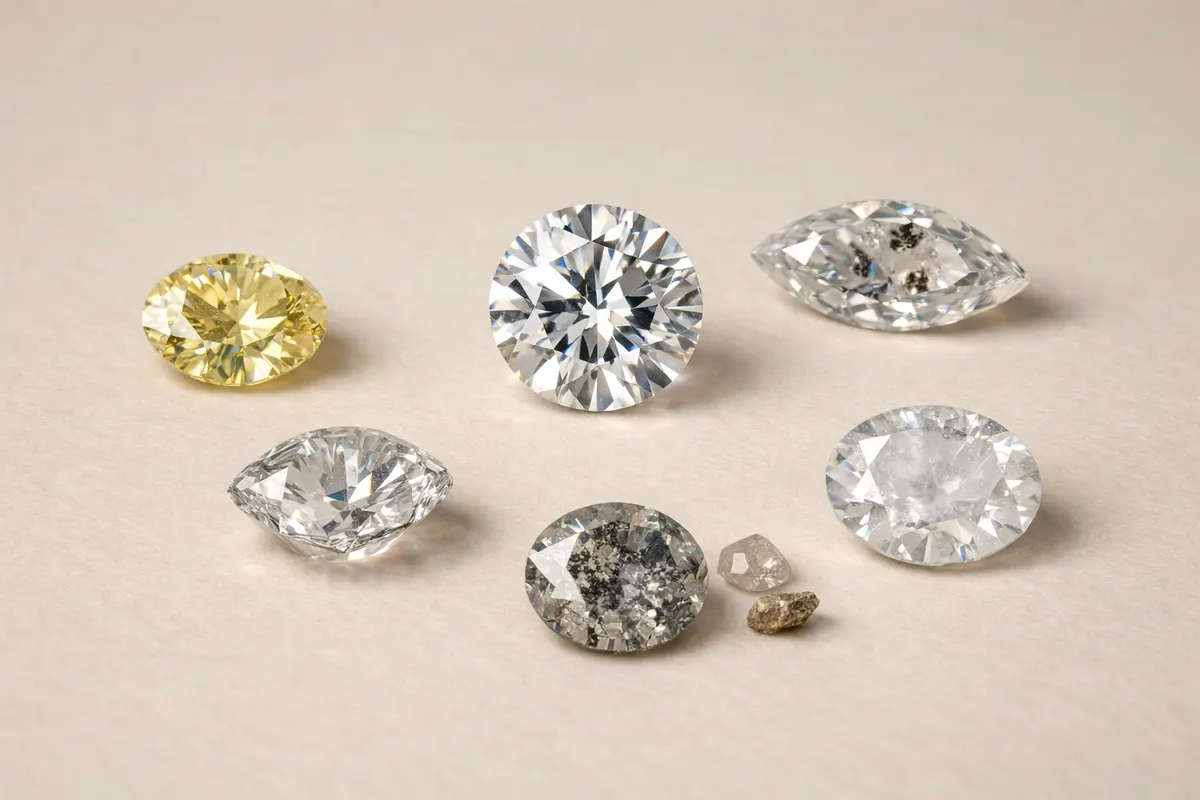
Real Diamond Identification identifications
View all examples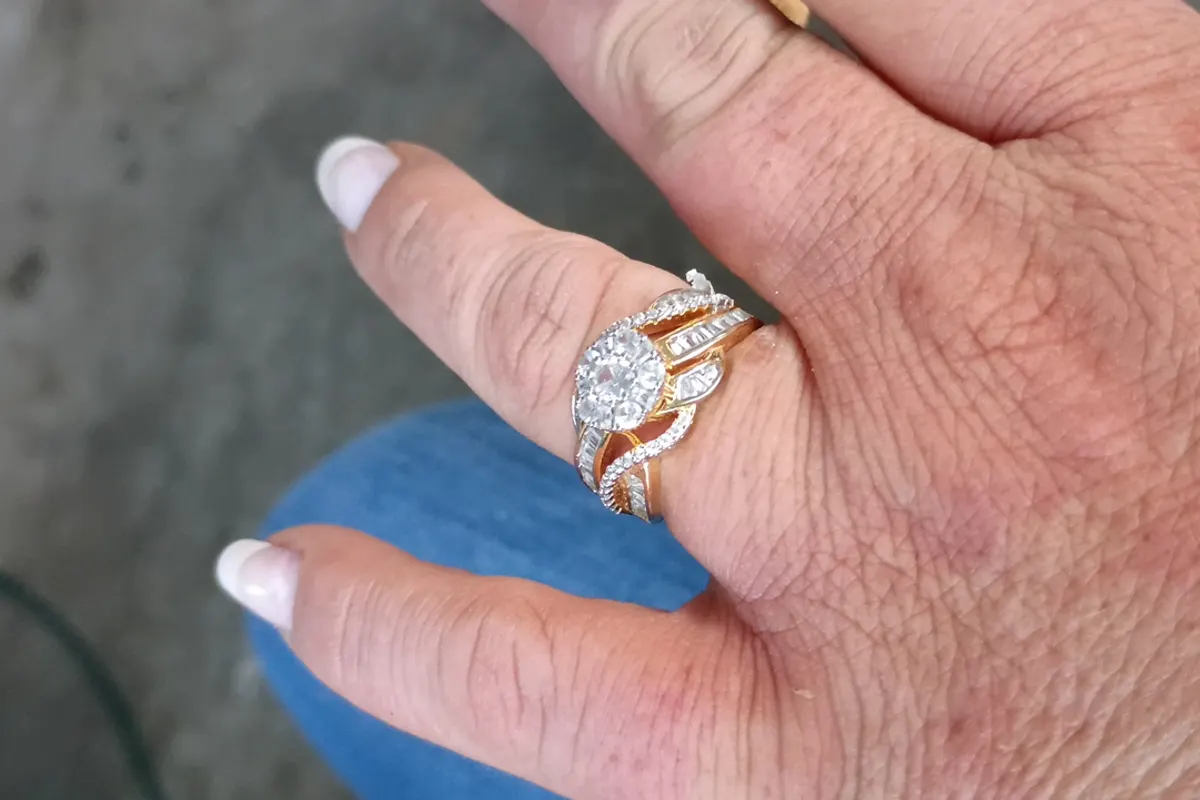
How identification works
Step 1
Snap a photo
Take a clear, well-lit photo of your item in the Jewelry Identifier By Picture app.
Step 2
Get an instant identification
The app reads the visible clues and returns the closest matches in seconds.
Step 3
Review the details
Compare the result with your photo, review any uncertainty, and check the suggested next steps.
Visible clues to check for diamond identification
When you inspect a stone for diamond identification, focus first on how it handles light and detail. Diamonds have a high refractive index: in photos you’ll often see sharp, contrasting reflections (white sparkle) and tiny, crisp dark facet junctions rather than soft internal blurring.
Next, examine the surface and edge details. Chips or abrasions on a very hard material like diamond are typically small; extensive scratch patterns or a frosted surface suggest softer simulants or treated glass.
Recordable marks and setting clues are valuable too. Hallmarks, bezel quality, prong style, and the presence of a laser inscription on the girdle (visible only under magnification) help build context around the stone and whether it aligns with a fine-diamond setting.
- Brilliance and fire: look for small, intense white flashes and colorful dispersion in bright, contrasty photos.
- Facet junctions: diamonds show sharp, angular facet junctions; blurred facet edges hint at glass or resin.
- Inclusions: pinpoint or feather inclusions are common; large gas bubbles or swirl patterns point to glass.
- Table reflection test: a clear reflection of the camera/phone in the table is often distorted in diamonds; a perfect mirror suggests simulant.
- Setting and weight cues: heavy, well-made settings with hallmarks usually accompany genuine diamonds; lightweight, flimsy mountings suggest costume stone.
What a photo-based diamond identification report includes
A focused diamond identification result from a photo typically lists the probable stone category (natural diamond, lab-grown diamond, or simulant), visible cut style, and observed clarity and color cues expressed as ranges rather than exact grades.
Reports also include photographic evidence notes: which photos were most diagnostic, visible inclusions or surface features, and any markers that conflict with a diamond ID (for example, obvious bubbles or wear patterns). Where available, the result flags whether the setting and hallmarks are consistent with the stone claim.
Because a photo can’t measure carat weight or certify origin, the report will recommend next steps when needed — simple at-home tests you can perform, and whether a professional gemological lab report is warranted for sale, insurance, or legal purposes. For broader guidance on safe visual checks, see this related guide: How to Tell if Jewelry Is Real: Safe Visual Checks Before You Trust a Match.
- Probable stone category and confidence level (photo-based assessment)
- Observed cut style and photo-visible clarity/color ranges
- Noted inclusions or surface features with photo references
- Setting and hallmark consistency notes
- Actionable next steps: home tests and when to seek lab certification
Items commonly mistaken for diamonds and photo tell-tales
Cubic zirconia (CZ) and moissanite are the top everyday lookalikes. In photos, CZ often shows a ‘softer’ sparkle with wider, less-contrasty reflections and occasional rainbow colors across large facets; moissanite produces more colorful fire and a doubled facet reflection under certain angles.
Glass and crystal simulants show swirl marks, gas bubbles, or a lack of sharp internal facet contrast. Costume jewelry settings that are plated or poorly finished often accompany these materials and are easy to spot in close-up photos.
Synthetic diamonds and lab-grown diamonds look like natural diamonds in most photos; distinguishing them by image alone isn’t reliable. When images show laser inscriptions, typical facet proportions, and matching setting quality, the stone is a higher-probability diamond candidate but still requires lab testing for definitive origin claims.
- Cubic zirconia: broader, softer reflections; inexpensive or plated settings.
- Moissanite: stronger colorful fire; may show doubled facets under magnification.
- Glass/crystal: visible bubbles, swirl lines, or worn plating in the setting.
- Synthetic vs natural diamond: indistinguishable in photos—lab testing needed for origin.
Frequently asked questions
Can I identify a diamond from a single photo?
A single well-lit photo can rule out obvious non-diamonds and highlight visual clues like facet sharpness, inclusions, and how the stone disperses light. However, photos can’t prove origin, exact carat, or produce a lab-grade certificate. Use photo results to decide whether simple home checks or professional lab testing are the right next steps.
What home tests help spot fake diamonds?
Useful at-home checks include the fog test (briefly breathe on the stone—diamond clears quickly), observing sparkle under strong directional light, and a water-drop or density check for loose stones. None of these replace professional testing: they only indicate whether the stone behaves like a diamond or clearly behaves like a simulant.
How much can a photo tell about diamond clarity and color?
Photos can show conspicuous inclusions, noticeable body color, and surface wear; a photo-based report will express clarity and color as ranges (for example, near-colorless to faint) rather than lab grades. Exact grading requires standardized lighting and microscopy in a gemological lab.
When should I send a stone for lab certification?
Seek lab certification when the stone is high-value, intended for sale or insurance, or when origin matters (natural vs lab-grown). If a photo-based assessment shows ambiguous indicators, unusual inclusions, or a mismatch between presumed value and setting quality, those are signs to pursue a recognized gemological report.
Related guides
Scan your stone with Jewelry Identifier
After you check the visible clues above, use the Jewelry Identifier app to get a photo-based identification that highlights the most diagnostic features and suggests safe next steps. The app’s result is a fast first pass — it narrows possibilities, points out lookalike signals visible in your photos, and tells you whether lab testing is recommended.