

Gemstone Identification
Citrine: Identification, Value, and Real Examples
Learn how to recognize citrine from photos, what visible clues matter, typical resale ranges, common lookalikes, and when to seek further testing.
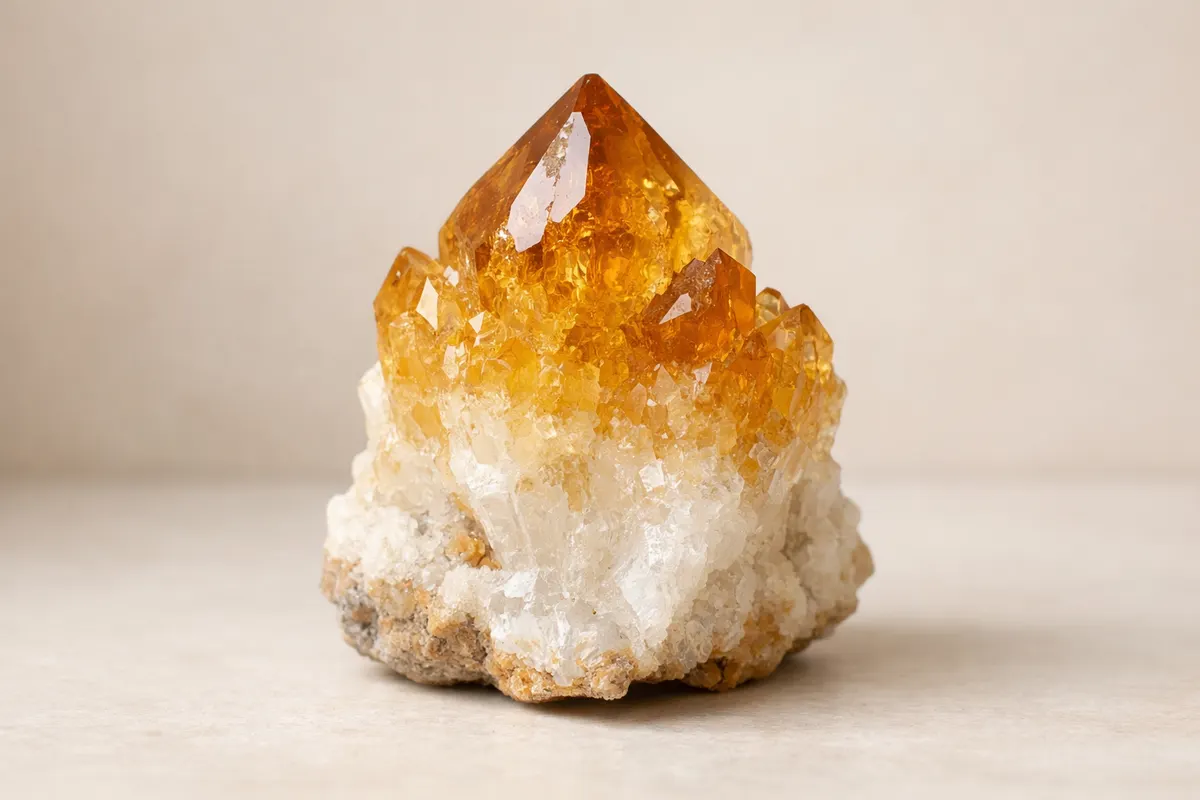
What citrine is and how it forms
Citrine is the yellow-to-orange variety of quartz. Its color comes from trace iron and, in many commercial stones, from heat treatment of amethyst or smoky quartz. Natural citrine (formed directly as yellow quartz) exists but is much less common on the market than heat-treated material.
Jewelry uses range from small accent stones in rings and bracelets to larger faceted center stones in pendants and cocktail rings. Typical cuts include oval, cushion, emerald, and brilliant cuts that show off the gem’s warm tones. Most affordable fashion jewelry uses smaller, calibrated citrines set in sterling silver or lower-karat gold.
Major sources for natural and commercial citrine include Brazil, Madagascar, and parts of Russia. Because heat treatment is widespread and accepted in the trade, sellers often list ‘citrine’ without specifying whether it’s natural or heat-treated; visual clues and lab reports are needed to separate those categories.
Keep in mind that ‘citrine’ describes a color range within quartz rather than a separate mineral species. That matters for identification: many of the stone’s physical properties — hardness, density, and typical inclusions — match quartz family norms.
How can you tell if a stone is citrine from a photo?
Color is the first photo clue: citrine spans pale yellow, honey, golden, and deeper reddish-orange tones (sometimes called Madeira). Natural citrine often shows a softer, honey-yellow hue or uneven color zoning. In contrast, heat-treated amethyst-turned-citrine frequently appears more uniformly orange or with a strong reddish base.
Look for internal features under magnification: natural quartz tends to show minute mineral inclusions, tiny growth tubes, or irregular zoning. Completely featureless stones with a very even tone should raise the possibility of glass or synthetic simulants. Photos taken with a clear macro and oblique lighting help reveal these details.
Facet reflections and sparkle also give clues. Quartz (including citrine) displays a relatively modest brilliance and low dispersion compared with high-dispersion simulants like cubic zirconia. If a stone’s brilliancy looks ‘rainbow flashy’ in a photo, it may not be natural citrine.
Other quick photo-checks: look at the stone’s cut finish — glass and low-cost synthetics often have softer facet edges or bubbles. Note the setting: mass-market, glued-in stones or unbranded costume mountings often point to inexpensive or synthetic material. Finally, remember that a photo alone can’t confirm natural origin or precise value; lab testing is the only definitive route.
- Color range: pale yellow to deep reddish-orange; uniform deep orange often indicates heat treatment.
- Internal clues: natural growth zoning, mineral inclusions, or tiny veils visible under magnification.
- Sparkle: quartz has low dispersion; excessive rainbow flashes suggest simulants.
- Setting clues: soldered or glued mounts and low-quality metal may indicate lower-value stone.
Citrine at a glance: key physical facts
This compact table lists the measurable attributes that identify citrine as a quartz variety and help set expectations for care and use in jewelry. These are useful reference points when comparing photos, descriptions, or resale listings.
Note that measurements like refractive index or specific gravity require instruments; photos can only suggest consistency with these specs, not confirm them.
| Attribute | Detail |
|---|---|
| Composition | Silicon dioxide (SiO2), quartz family |
| Color range | Pale yellow, honey, golden, reddish-orange (Madeira) |
| Mohs hardness | 7 (reasonably scratch-resistant) |
| Refractive index | ≈ 1.544–1.553 (single-crystal quartz range) |
| Specific gravity | ≈ 2.65 |
| Common treatments | Heat treatment of amethyst or smoky quartz to produce orange tones |
| Typical settings | Sterling silver, 9–18K gold, bezel and prong mounts |
| Care sensitivity | Moderately durable but can chip; avoid sudden thermal shock and harsh chemicals |
Typical resale ranges and what affects citrine’s price
Citrine is generally affordable compared with many colored gemstones, but quality variation is wide. Resale values depend on color saturation, clarity, cut quality, carat weight, and whether the stone is natural or heat-treated. All figures below are approximate secondhand ranges; a photo cannot replace an in-person appraisal or lab report.
Smaller fashion pieces set in lower-karat metals usually return modest resale prices, while larger, well-cut stones with strong, even color can command higher per-carat rates. Provenance (a reputable dealer or lab certificate) also raises buyer confidence and resale potential.
When evaluating value from images, focus on color depth, visible damage (chips, scratches), clarity, and the quality of the mounting. If multiple images show consistent color and minimal wear, the piece will usually fetch a stronger resale price than one with surface wear or uneven tone.
| Tier | Typical secondhand range | What drives value |
|---|---|---|
| Mass-market / small | $10–$75 per finished piece (or ~$1–$10 per carat) | Pale color, small size, common settings, often heat-treated |
| Mid-range gem | $50–$300 per finished piece (or ~$10–$50 per carat) | Clear, warm golden color, good cut, minimal inclusions |
| High-quality gem | $200–$1,200+ per finished piece (or ~$50–$350 per carat) | Deep saturated color, exceptional clarity or larger carat weight |
| Collector / rare natural | Variable—can exceed table ranges for museum-caliber stones | Documented natural origin, rare color, provenance or gem lab reports |
Commonly confused with
Citrine is most often confused with other yellow/orange gems and simulants. The common lookalikes you’ll see in photos are yellow topaz, smoky quartz, heat-treated amethyst, glass, and high-dispersion synthetics such as cubic zirconia. Each has visual clues a careful image can reveal.
Yellow topaz often shows higher brilliance and crisper facet reflections; topaz also tends to be clearer with fewer internal growth features. Smoky quartz looks browner or greyer than golden citrine. Heat-treated amethyst may display abrupt color zoning or a stronger orange at one end of the stone.
Glass simulants sometimes show small rounded air bubbles and softer facet edges in macro photos. High-dispersion synthetics display intense rainbow flashes in bright light, which citrine does not. For more on distinguishing natural-looking synthetics, our cubic zirconia guide can help (https://jewelry-identifier.app/wiki/cubic-zirconia).
When a photo raises doubts, ask the seller for additional views (oblique lighting, macro of pavilion and girdle) and any paperwork. For legal or high-value transactions, require a gem lab report rather than relying on photos alone.
- Topaz: crisper brilliance and clearer appearance than typical citrine.
- Amethyst (heat-treated): uneven color bands, stronger orange near the base.
- Glass: air bubbles, poor facet edges, and inconsistent refractive behavior.
- Cubic zirconia/synthetics: intense 'rainbow' fire not expected in quartz.
How to care for citrine jewelry
Citrine is relatively hard (Mohs 7) and tolerates everyday wear, but it can chip with hard knocks and dull if exposed to harsh abrasives. Clean citrine jewelry with warm water, mild soap, and a soft brush. Rinse thoroughly and dry with a lint-free cloth.
Avoid prolonged exposure to intense sunlight or strong heat sources; some citrines (especially dyed or heat-treated pieces) can fade or change tone over time. Do not use household bleach or strong acids. Ultrasonic cleaners are generally safe for clean, intact quartz but should be avoided for stones with surface-reaching fractures or for older settings that might be weakened.
Store citrine separately from harder stones like sapphires or diamonds to prevent abrasion. For valuable or historically important pieces, consult a professional conservator or jeweler before attempting any home cleaning.
Frequently asked questions
Is citrine always natural?
No—many market citrines are produced by heating amethyst or smoky quartz, which creates the yellow-orange color. Natural citrine that formed as yellow quartz in the earth is less common. Visual clues (softer honey tones, uneven zoning) can suggest natural origin, but only a gem laboratory test can confirm whether a stone is truly natural.
Can I tell citrine from topaz in photos?
Photos can offer hints: topaz often looks clearer with crisper facet reflections and less internal zoning, while citrine usually shows a warmer, softer shine and occasional growth features. However, overlap exists and refractive/density tests or a lab report are needed for certainty.
Will citrine fade if left in sunlight?
Citrine is generally stable, but prolonged exposure to intense sunlight or heat can cause some stones—especially treated or dyed material—to lose intensity over time. Store citrine jewelry out of direct sunlight when not worn and limit extended exposure to strong heat sources.
How can I get an accurate value for my citrine piece?
An accurate resale or insurance value requires hands-on inspection: weight (carat), color saturation, clarity, cut quality, metal in the setting, and any documentation. Use photos for an initial estimate, but get a local appraiser or gem lab report for a reliable valuation; a single photo cannot establish a formal appraisal.
Related guides
Compare a photo of your piece to citrine clues
Take clear macro photos (top, side, and oblique light) and use the Jewelry Identifier app on iOS to compare your images against the citrine visual clues listed here. The app helps flag likely lookalikes and highlights photo features to check next, but it cannot replace lab testing or an in-person appraisal. If a result looks promising, gather carat weight and provenance documents and consider professional verification for high-value pieces.
Take the next step →