

Diamond Identification
Cubic Zirconia: Identification, Value, and Real Examples
Learn what cubic zirconia is, which photo clues reliably point to CZ, and realistic secondhand value ranges to expect when you’re evaluating a stone by sight.
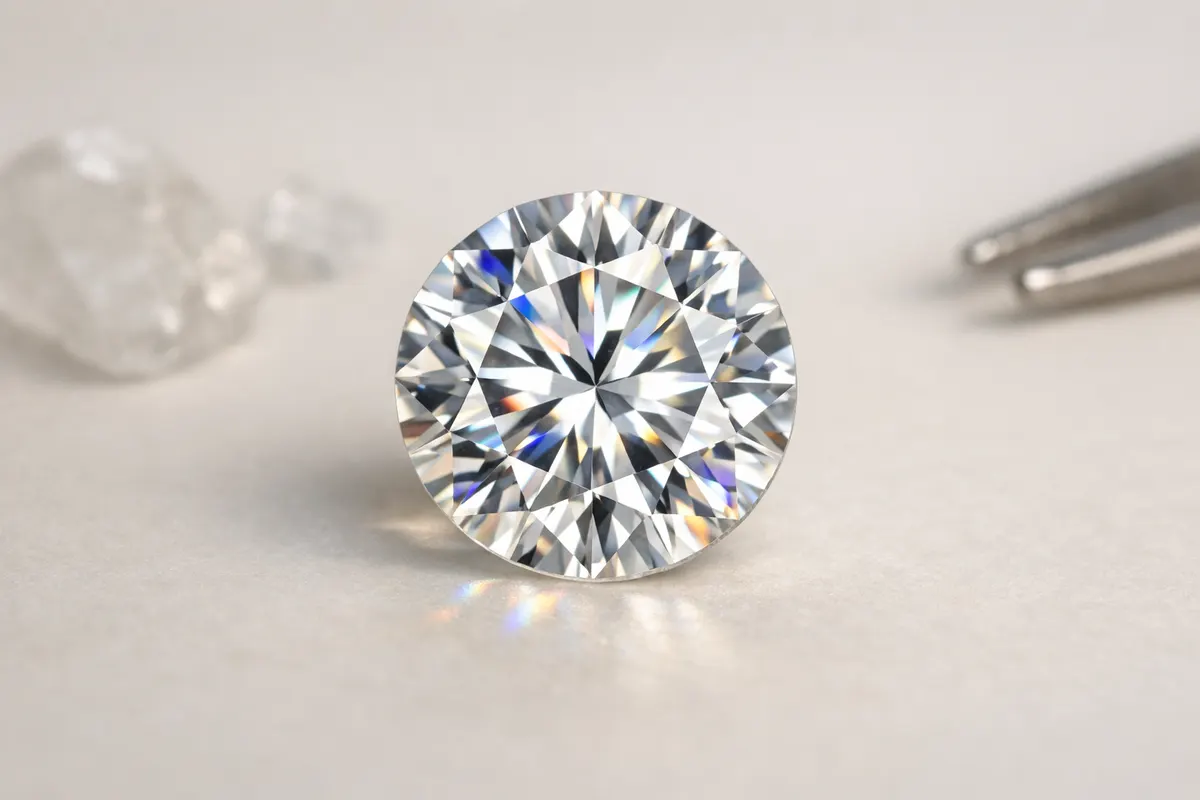
What is cubic zirconia?
Cubic zirconia (often abbreviated CZ) is a lab-grown crystalline form of zirconium dioxide made to mimic the look of colorless gemstones. It was developed as an inexpensive, optically clean alternative to diamond and is cut and set in most types of fashion and fine jewelry, from solitaire rings to cocktail pendants.
Unlike diamonds, cubic zirconia is fully synthetic: it does not form in nature under the same conditions as diamond. Its popularity comes from a high refractive index and dispersion that give CZ strong sparkle and perceived brilliance in photos, especially when well-cut.
Because CZ is manufactured, it can appear near-flawless and come in consistent sizes and colors. That uniformity is helpful for mass-produced jewelry, but it also creates predictable visual cues you can look for in photographs to separate CZ from natural stones.
- Composition: cubic crystalline zirconium dioxide (ZrO2) produced in labs.
- Typical uses: fashion rings, simulated diamond solitaires, cluster and halo settings.
- Visual character: high brilliance and dispersion, often very clean and colorless unless intentionally tinted.
How can you tell if a stone is cubic zirconia?
Photos alone can’t prove a stone’s origin, but they do reveal several reliable clues that point toward cubic zirconia. CZ usually displays unusually strong, white sparkle and high contrast flashes because its refractive and dispersive properties differ from diamond and moissanite.
Look for optical behavior first: CZ produces broad, colorful flashes in some light but tends to show more white 'glitter' than the sharp, tiny white and rainbow flashes typical of diamond. In close-up photos, CZ often shows fewer internal inclusions and more perfectly symmetrical facets than most mined stones.
Weight and size are another visible hint when you can compare the stone to the setting: CZ is denser than diamond, so a CZ of the same diameter will weigh slightly more — but you’ll usually need measurements or a jeweler’s scale to use that. Instead, examine bezel fit, prong wear, and how the setting relates to the stone’s size: inexpensive settings with glued or low prong count attachments more often host CZ.
A loupe or macro photo can reveal edge wear and facet rounding. CZ scratches and chips differently from diamond: look for small facet chips, a rounded girdle, or a slightly cloudy surface in worn pieces. Those signs are consistent with CZ and some other simulants but are uncommon in well-cared-for diamonds.
- High, broad white sparkle with fewer tiny pinpoint reflections suggests CZ.
- Near-perfect clarity and symmetry — no visible inclusions in macro photos — is common for CZ.
- Settings: inexpensive or plated mountings, low prong count, or glued stones increase the likelihood of CZ.
- Edge wear, small chips, or a slightly frosted surface on close inspection favor CZ over diamond.
- Color: perfectly colorless stones in older pieces are more likely CZ than mined diamonds, which typically have slight tints.
Cubic zirconia: quick specs
This table summarizes the physical and practical attributes you’ll most often see referenced for cubic zirconia. Use these specs to compare photo observations against expected behavior and to pick which follow-up checks matter most.
Photo clues column highlights what a photograph can reveal quickly; lab testing is required to be definitive on hardness, density, and chemical composition.
| Attribute | Typical value | Photo clues |
|---|---|---|
| Composition | Zirconium dioxide (ZrO2), synthetic | Perfectly clear, consistent color across multiple stones |
| Mohs hardness | Approx. 8.0–8.5 | Can show small chips or facet wear under magnification |
| Specific gravity | About 5.6–6.0 (heavier than diamond) | Stone may sit slightly deeper in bezel, but requires measurement |
| Refractive index / dispersion | RI ~2.15–2.18; strong dispersion | Strong colorful flashes, but broader 'fire' than diamond |
| Common marks | Usually no natural inclusions; polished lab marks possible | Very clean interior in loupe or macro photos |
| Typical settings | Fashion and sterling to gold-plated and fine metal mountings | Paired with plated or low-karat settings more often than high-karat solitaire rings |
What cubic zirconia is worth (resale tiers)
Cubic zirconia has modest secondhand value compared with natural gemstones. Resale prices depend heavily on the setting, metal content, maker, size, and whether the piece has collectible or designer provenance. The stone itself is inexpensive; much of resale value comes from the mounting and brand.
These ranges reflect typical points of sale for preowned jewelry — local classifieds, auction sites, and secondhand marketplaces. They are intended as directional guidance, not an appraisal. Condition, paperwork, and market demand at the time of sale are major price drivers.
If you need an exact valuation for insurance or sale, a professional in-person appraisal or a lab test for metal and stone identification is the appropriate next step.
| Tier | Typical resale range (USD) | What drives the price |
|---|---|---|
| Loose small CZ / inexpensive bling | $5–$30 | Material cost of CZ and low-cost plating or base metal settings |
| CZ in sterling or solid precious metal | $20–$150 | Value of silver/gold plus condition and workmanship |
| Larger statement CZ in good condition | $50–$300 | Size and cut quality, plus desirability of the design |
| Designer or vintage pieces with CZ | $100–$500+ | Brand name, collectibility, and high-quality metal work |
Stones cubic zirconia is often mistaken for
Cubic zirconia most commonly gets confused with diamond, moissanite, and other synthetic simulants. Photographs offer useful differentiators for each: look at sparkle pattern, color dispersion, and setting quality as first-pass clues.
Diamond: diamonds present tiny, brilliant pinpoints of white sparkle with restrained rainbow fire; moissanite tends to show more rainbow flashes than diamond, while CZ usually shows broad, softer dispersion. For a deeper comparison of diamond photo clues, see Diamond Identification — What to Look For, With Real Examples (https://jewelry-identifier.app/identify/diamond-identification).
Moissanite: moissanite can look closer to diamond in photos but usually shows a very distinct doubling of facet reflections and more fire. For a focused guide on this distinction, the page Moissanite vs Diamond: Visual Clues, Photo Limits, and When to Test (https://jewelry-identifier.app/blog/moissanite-vs-diamond) is a practical next read.
- Diamond vs CZ: check for tiny pinpoints of white sparkle and real-world setting quality.
- Moissanite vs CZ: moissanite often shows doubled facet images and stronger rainbow flashes.
- Glass and crystal: glass has lower dispersion and often visible bubbles or flow lines under magnification.
Caring for cubic zirconia
Cubic zirconia is harder than common glass but softer than diamond, so it benefits from gentle handling. Clean CZ with warm soapy water and a soft brush or an ultrasonic cleaner for metal-set pieces, but avoid harsh abrasives that can dull the polish over time.
Because CZ can chip and lose mirror-like polish with abrasion, remove CZ rings for heavy work and avoid exposure to household chemicals that can affect the mounting. Regularly inspect prongs and glue joints; many lower-cost CZ settings rely on glue that can fail and is obvious in photographs as a gap or cloudy residue.
- Cleaning: mild detergent, soft brush, and rinsing; ultrasonic OK for sturdy metal settings.
- Storage: store separately to prevent abrasion with harder stones.
- Inspection: check prongs and glue lines; a slipped or cloudy bezel often signals a low-cost setting.
Frequently asked questions
Can you tell cubic zirconia from a photo alone?
Photos can show many clues—unusually perfect clarity, broad white sparkle, and inexpensive-looking settings all suggest cubic zirconia—but a photograph can’t offer certainty. Definitive identification requires in-person tests (refractive index, hardness, or specific-gravity measurements) or a trained appraiser’s inspection.
Is cubic zirconia worth anything?
Cubic zirconia stones themselves are inexpensive; resale value usually comes from the metal, maker, or design. Typical secondhand CZ pieces sell from under $20 for costume items up to a few hundred dollars for designer or high-quality metal settings.
How does CZ wear compared with diamond?
CZ is relatively durable but more prone to surface wear, facet rounding, and small chips compared with diamond. Over years of everyday wear, CZ can lose luster and show abrasion, whereas diamonds are far more resistant to scratching and chipping.
What should I do if I suspect a stone is CZ but want proof?
Start with clear macro photos showing the setting, girdle, and any inclusions, then consult a jeweler for basic tests. If resale, insurance, or authenticity matters, request a professional appraisal or lab report that includes refractive index and specific-gravity testing; those are the only ways to be definitive.
Related guides
Compare a photo against cubic zirconia clues
Use the Jewelry Identifier app on your phone to compare a photo of your piece to the visual CZ clues in this guide. Treat the app as a first pass: it helps shortlist likely CZ candidates so you can decide whether in-person testing or a formal appraisal is the next step.
Take the next step →