

Gold Jewelry
Gold Karat Marks (10K, 14K, 18K): Identification and Value
Practical guidance on 14k gold: stamps (14K/585), photo-checkable clues, typical secondhand value ranges, and safe next steps for verification.
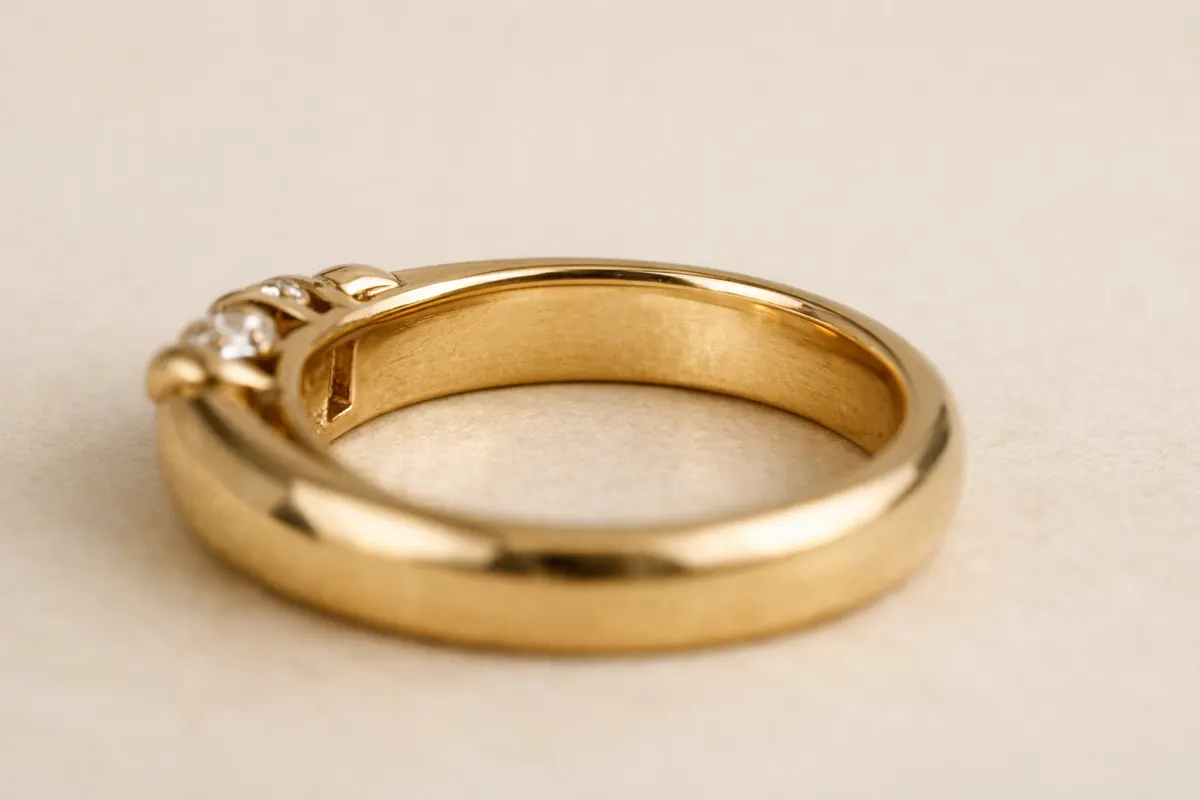
What 14k gold is and where it's used
14k gold is an alloy containing about 58.5% pure gold and 41.5% other metals (commonly copper, silver, and sometimes nickel or zinc). The '14k' designation refers to the karat system, where 24 karats is pure gold; 14 parts out of 24 are gold in 14k metal.
Because it blends gold with harder metals, 14k gold is a popular balance of durability, color variety, and cost. Jewelers use 14k in rings, chains, bracelets, and many everyday pieces where wear resistance matters more than the higher purity and softer feel of 18k or 22k gold.
Visually, 14k pieces show the warm yellow of gold but can vary—rose or white 14k result from different alloy blends. The alloying metals change color subtly and affect hardness and tarnish behavior, so two pieces both stamped 14k can still look and wear differently depending on their exact composition.
- Composition: ~58.5% gold + alloy metals (copper, silver, nickel, etc.).
- Common uses: engagement rings, everyday necklaces, bracelets, and small mounts.
- Color variants: yellow, white (rhodium-plated sometimes), and rose depending on alloys.
- Practical tradeoff: harder and less expensive than 18k, softer and richer than 10k.
How can you tell 14k gold from photos?
Start with stamps and marks: photograph any hallmarks inside bands, on clasps, or near settings. Common 14k marks are '14K', '14k', '14Kt', or the millesimal '585' (meaning 58.5% gold). Stamps are strong clues but can be missing, faint, or altered; treat them as evidence, not proof.
Look at color and wear patterns in close-up photos. Yellow 14k keeps a warm tone but shows bright wear at thin edges or high-contact areas where underlying alloys may discolor differently. White 14k is often plated with rhodium; plating wear exposes a slightly yellowish base metal.
Check weight and scale in images: 14k jewelry will feel heavier than plated pieces of the same size because it contains solid metal throughout. When possible, photograph the piece next to a common object (a coin or ruler) to help estimate thickness and heft. Avoid relying solely on color—lighting, camera white balance, and coatings change appearance.
Simple non-destructive photo checks: see if magnets affect paired metal components in the picture (strong attraction usually indicates base metals or ferrous alloys). Use a loupe or high-res crop to inspect hallmark sharpness and the seam between plated layers and base metal. When a photo raises doubt, note the exact visible clues to compare with an expert or a documented reference.
- Primary photo clue: clear hallmarks — 14K, 14k, 14Kt, or 585.
- Color cues: consistent warm yellow for solid yellow 14k; exposed yellow under worn white plating.
- Edge wear: bright or greenish discoloration at joints suggests plating or alloy differences.
- Size/weight context: photograph next to a coin or ruler to estimate heft vs plated lookalikes.
14k gold — key specs at a glance
The table below summarizes the technical details collectors and buyers most often need when checking a piece in photos. These attributes are useful for quick identification and for deciding which next checks make sense.
Keep in mind that marks and composition are the most objective attributes; hardness and care sensitivity describe typical behavior but can vary with precise alloy mixes.
| Attribute | Typical detail | Why it matters |
|---|---|---|
| Composition | ≈58.5% gold; remainder copper/silver/nickel/zinc | Determines color, weight, and hypoallergenic risk |
| Common marks | 14K, 14k, 14Kt, 585 | Primary photo-checkable evidence of fineness |
| Hardness | Moderately hard (harder than 18k, softer than 10k) | Explains suitability for daily-wear rings and chains |
| Typical settings | Solitaire rings, chains, small gemstone mounts | Frequently used where balance of durability and value is needed |
| Care sensitivity | May need rhodium re-plate for white variants; avoid harsh chemicals | Affects long-term appearance and maintenance schedules |
What 14k gold is worth in secondhand markets
Secondhand value for 14k gold depends on metal weight, local gold spot price, buyer margins, and whether the piece has collectible, designer, or gemstone value. For scrap or melt sales, refiners pay for pure gold content after accounting for the 14k fineness and processing fees.
Photographs let you estimate condition, possible gemstones, and maker marks that add value, but they cannot confirm weight or authenticity with certainty. Treat photo estimates as a first pass; always request a scale weight, hallmark verification, and, when possible, an independent test before accepting an offer.
| Tier | Typical secondhand range | What drives price |
|---|---|---|
| Scrap/melt (plain metal) | Roughly 50–75% of current 24k spot value adjusted for 14k fineness | Weight and metal purity; no design premium |
| Everyday jewelry (rings, chains) | Small pieces often $30–$200 depending on weight and condition | Weight, clasp condition, visible wear, and buyer margins |
| Designer or vintage | Can exceed melt by 20–200% when maker or era adds demand | Brand, provenance, desirable vintage styles, intact hallmarks |
| Pieces with gemstones | Value varies widely; stones often drive price beyond metal | Type and quality of gemstones, settings, and repair needs |
- Drivers of resale: total gold weight, current spot price, condition, maker or designer name, presence and quality of stones, and local buyer demand.
- Small, plain items often sell closer to melt value; branded or vintage pieces can carry premiums.
- Expect buyer offers to be meaningfully below retail replacement cost; resale markets apply processing and resale margins.
What 14k gold is often confused with
Plated gold (gold-filled or vermeil): pictures can look similar to solid 14k, especially when plating is fresh. Look for seam lines at clasps, color differences at worn edges, and a slightly lighter weight for plated pieces compared with solid metal of the same size.
10k gold: stamped '10K' or '417' (41.7% gold). In photos, 10k tends to have a slightly paler yellow than 14k because it contains less pure gold. Comparing clear hallmarks (10K vs 14K or 417 vs 585) is the fastest way to tell them apart.
Base metals or brass with a gold tone: these are often magnetic or show greenish corrosion at contact points. A clear hallmark and heft consistent with solid metal are the best photo clues to rule out base-metal lookalikes.
- Plating signs: abrupt color change at edges, visible base metal near prongs or joints.
- 10k vs 14k: check for '10K'/'417' versus '14K'/'585' marks in photos.
- Brass/base metal: lightness and corrosion (green or black residue) often visible in photos.
Care and handling for 14k gold jewelry
Routine cleaning: gently wash 14k pieces with mild soap and warm water, then dry with a soft cloth. For white 14k that has a rhodium plate, avoid abrasive cleaners that remove plating; re-plating restores bright white finish when needed.
Storage and wear: store 14k items separately to minimize scratches. Remove rings for heavy work and for exposure to chlorine or strong chemicals, which can damage alloys and any gemstones.
Professional checks: have prongs and settings inspected periodically—loose stones and worn settings are common causes of loss and reduce secondhand desirability.
- Clean with mild soap, soft brush, and a microfiber cloth.
- Avoid bleach, chlorine pools, and abrasive polishing for plated white gold.
- Schedule prong and clasp checks with a jeweler if you wear a piece daily.
Frequently asked questions
What does 585 mean on jewelry?
The '585' stamp is a millesimal fineness mark meaning the metal contains 58.5% pure gold, which corresponds to 14k. It’s a numeric alternative to the '14K' stamp and is common on European and international pieces. Treat a clear 585 mark as strong evidence, but confirm with weight or testing if value matters.
How much is 10k gold worth compared with 14k?
Ten karat gold is about 41.7% pure gold (often stamped '10K' or '417'), so its metal-only value is lower than 14k. In resale markets, 10k typically fetches less per gram than 14k because it contains less gold; final offers depend on weight, condition, and buyer margins. Use fineness and weight together to estimate relative worth, and expect buyer offers to be below retail price.
Is 14k gold hypoallergenic?
14k gold is not universally hypoallergenic because the remaining 41.5% of the alloy can include nickel, which some people react to. Rose 14k (more copper) and white 14k (often nickel or palladium) vary in irritant risk. If you have nickel sensitivity, look for pieces labelled nickel-free or choose higher-purity gold (18k) or specific alloys known to be low-allergen.
How can I test 14k gold at home before seeing an expert?
For a first pass, photograph and read any clear hallmarks, check for magnet attraction (gold is not magnetic), and look closely at thin edges for plating wear. Avoid acid testing at home unless you are experienced—acid can damage jewelry. For confirmation beyond photos, request a weight measurement, a documented hallmark check, or bring the piece to a trusted jeweler for professional testing.
Related guides
Compare your piece with Jewelry Identifier
Use the Jewelry Identifier app to compare a photo of your piece against the hallmark and wear clues described here. The app can highlight visible marks, offer likely karat matches, and point to next checks—useful as a first pass. Remember: photo-based results are informative but not certainties; for weight, gemstone grading, or a formal appraisal, follow up with a professional or a verified lab.
Take the next step →