

Gold Jewelry
Gold-Filled vs Gold-Plated: Identification, Value, and Real Examples
Learn how to tell gold filled vs gold plated by visible clues, marks, wear patterns, and typical resale ranges, plus photo-check steps and cautious next checks.
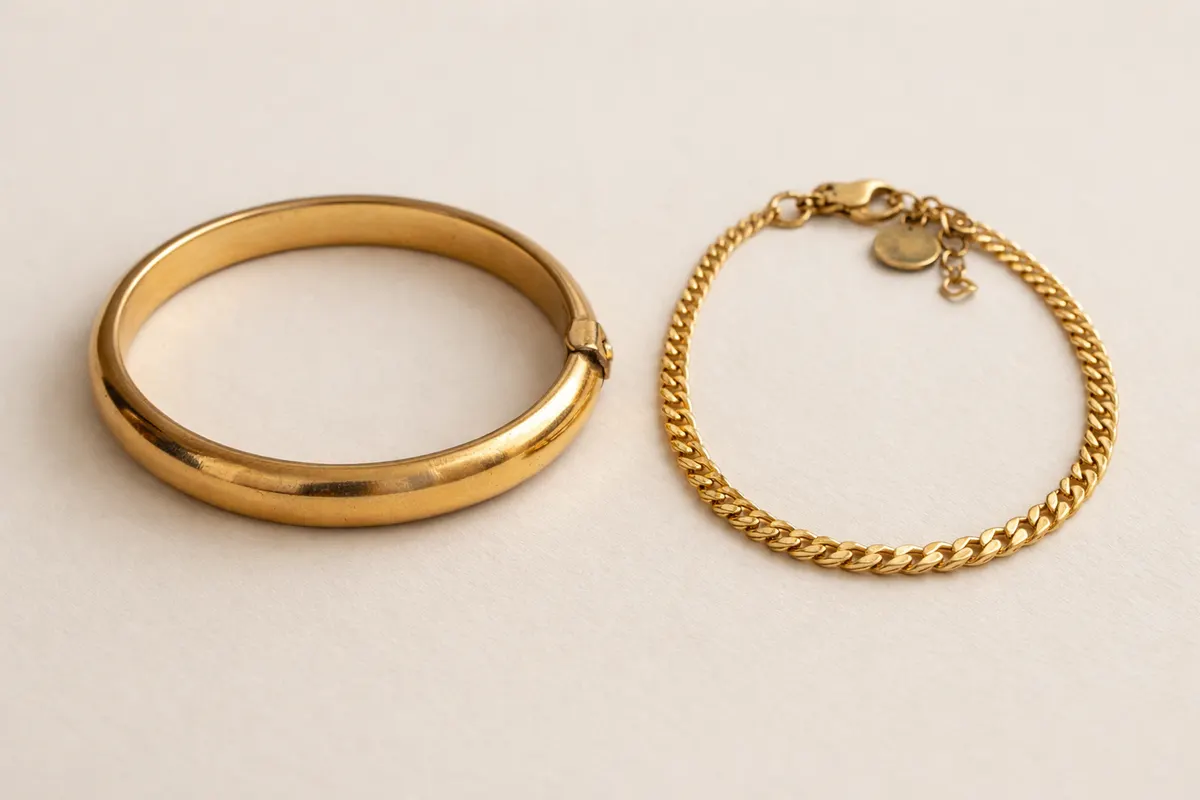
What gold-filled and gold-plated mean
Gold-filled and gold-plated describe two different ways of applying gold to a base metal. Gold-filled (often stamped “GF” or with a weight fraction such as “1/20 14K GF”) is made by mechanically bonding a thick layer of solid gold to a base metal so the gold makes up a measurable percentage of the item’s weight. Gold-plated pieces receive a much thinner electroplated coating of gold over a cheaper metal.
The practical difference is durability and gold content. A properly marked gold-filled piece contains a substantial gold layer intended to last years of wear without exposing the base metal; plating is cosmetic, wears faster, and can flake or rub off where the piece contacts skin or clothing.
Manufacturers use gold-filled for everyday jewelry like chains, watch cases, and costume pieces that need longer life without the expense of solid gold. Gold-plating is common for fashion jewelry, trends, and pieces where cost is the priority.
In everyday shorthand you’ll see “GF” or “gold filled” on tags and stamps, while “GP” or no clear hallmark often signals plating. Remember that marks can be missing, altered, or forged—visible clues are helpful but not definitive on their own.
How can you tell gold-filled vs gold-plated from photos?
Start with stamps and hallmarks in clear macro photos. Common gold-filled stamps include “GF,” “G.F.,” or a fraction plus karat such as “1/20 14K GF” (meaning one-twentieth of the item’s weight is 14K gold). Plated pieces sometimes show “GP,” “EP” (electroplated), or no gold mark at all. A legible, consistent stamped mark increases confidence but is not proof by itself.
Look for wear patterns in the finish. Gold-plated surfaces usually show abrupt dark lines or spots where the gold has rubbed off and the base metal (often copper or brass) reveals a different color. Gold-filled items typically show gradual color change along edges or high-wear points rather than sharp flaking, because the gold layer is thicker and bonded.
Color and sheen provide clues when lighting and white balance are controlled: gold-filled often maintains a warmer, slightly deeper tone similar to solid gold; plated pieces can appear brighter or overly yellow when fresh and then dull unevenly with wear. Use close-up photos of clasps, chain links, jump rings and the inside of rings—these areas reveal wear sooner.
Other photo-checks: weight and heft are hard to judge from images but visual scale (compare with a coin) can hint at density—gold-filled jewelry often looks chunkier for the same size than thin-plated fashion pieces. Magnetic tests and acid tests can’t be done from a photo; if you need verification, note the visible clues first, then plan a physical test or professional check.
- Check for stamps: “GF,” “1/20 14K GF,” “G.F.” suggest gold-filled; “GP,” “EP,” or no stamp often indicates plated.
- Inspect wear: look for abrupt base-metal exposure (plated) versus gradual discoloration or worn-down sheen (gold-filled).
- Photograph high-contact spots—clasps, earring posts, ring inner bands—for earliest signs of loss.
- Watch color consistency: plated pieces can show patchy yellow, while gold-filled tends to age more evenly.
Key facts
This compact table summarizes composition, common marks, and typical use for gold-filled and gold-plated items. Use these attributes when comparing a photo to what you expect to see on each type.
If a photo shows a clear hallmark and matched wear patterns, that combination provides stronger evidence than either alone. When stamps and photos conflict, favor physical testing or professional inspection.
| Attribute | Gold-filled | Gold-plated |
|---|---|---|
| Typical composition | Thick layer of solid gold mechanically bonded; often expressed as fraction (eg. 1/20 14K) | Thin electroplated gold layer over base metal (copper, brass, nickel) |
| Common hallmarks | GF, G.F., 1/20 14K GF, 14K GF | GP, EP, sometimes no hallmark |
| Durability | High for plated alternatives; resists wear for years depending on use | Low—shows wear, rubbing, and flaking with frequent contact |
| Typical uses | Everyday chains, watch cases, higher-quality costume pieces | Trend jewelry, low-cost fashion items, seasonal lines |
| Care sensitivity | Gentle cleaning, avoid harsh abrasives to preserve bonded layer | Very sensitive—abrasives and chemical exposure remove plating quickly |
What gold-filled and gold-plated items typically sell for
Secondhand values depend on condition, brand/maker, style, and whether the piece is gold-filled or plated. These ranges reflect typical resale prices on casual secondhand marketplaces and estate sales, not formal appraisals. Use them as broad guides rather than guaranteed outcomes.
Condition and maker matter: a well-preserved branded gold-filled chain or a vintage designer piece can command prices nearer the higher end; mass-produced plated fashion jewelry generally attracts low resale interest unless it’s collectible or from a known designer.
If you’re estimating from photos, be conservative. Visible wear, missing hallmarks, or heavy polishing lower resale expectations; intact stamps and minimal wear increase buyer confidence and value.
| Tier | Typical resale range (USD) | What drives value |
|---|---|---|
| Low | $5–$30 | Worn plated pieces, broken clasps, common fashion brands |
| Mid | $30–$150 | Good-condition gold-filled chains, non-designer plated pieces in excellent condition |
| High | $150–$600 | Designer gold-filled pieces, heavier chains, vintage pieces with intact hallmarks |
| Collector / Designer | $600+ | Named designers, rare vintage examples, pieces with provenance or unusual construction |
Items gold-filled and gold-plated are often mistaken for
Gold-filled and plated items are commonly confused with several other finishes. The most frequent lookalikes are solid gold, gold vermeil, and thick-layered electroplate; photos can catch the differences if you know what to inspect.
Solid gold is denser and usually hallmarked with karat stamps (10K, 14K, 18K). From photos, solid gold jewelry often shows consistent color, heavier construction, and clearer karat stamps. However, small or worn stamps can mislead—don’t assume solid gold from color alone.
Gold vermeil is sterling silver with a thicker gold plating (by legal definition often >2.5 microns and over sterling). Vermeil can look like plated or filled jewelry in pictures; the tell is often the base metal color at worn areas (silver tone for vermeil versus reddish tones for copper/brass bases) and the presence of sterling marks such as “925.”
- Solid gold: look for karat marks and even color; vermeil/plating usually reveals base metal color at wear points.
- Gold vermeil: similar to plated but over sterling silver—check for “925” or “Sterling” in photos.
- Thick electroplate vs gold-filled: thick electroplate may look durable in new photos but reveals abrupt edge wear rather than the gradual patina of gold-filled.
Care and handling for gold-filled and gold-plated jewelry
Clean gold-filled items with warm water, mild dish soap, and a soft cloth. Dry thoroughly and store pieces separately to avoid abrasion. Because the gold layer is thick and mechanically bonded, gentle cleaning maintains appearance without risking exposure of the base metal.
For gold-plated pieces use extra caution: avoid ultrasonic cleaners, polishing compounds, and abrasive cloths. Light soap and a soft cloth are safest. If plating is worn or flaking, professional re-plating or gentle surface cleaning are the only worthwhile fixes for sentimental or wearable items.
Always remove both plated and filled jewelry before swimming, applying lotions, or using household chemicals—chlorine, sweat, and acids accelerate wear. For pieces whose identity matters to resale or safety (for example, allergic reactions to base metals), plan a professional inspection before prolonged wear.
Frequently asked questions
What does GF mean on jewelry?
GF stands for gold-filled. It indicates a thick layer of solid gold has been mechanically bonded to a base metal. Many gold-filled items are also stamped with a fraction and karat (for example “1/20 14K GF”), which tells you the proportion of gold by weight and the karat of that gold.
Is gold-filled jewelry worth anything?
Yes—gold-filled jewelry usually has higher secondhand value than plated pieces because of the substantial gold layer and greater durability. Typical resale values vary widely by condition and maker, but many gold-filled chains and bracelets sell for tens to a few hundred dollars; branded or vintage pieces can fetch more. These are market estimates, not appraisals.
How is gold vermeil different from gold-plated?
Gold vermeil is gold plating over sterling silver and is generally thicker than standard plating; legal definitions often require a minimum gold thickness (for example, 2.5 microns) and a sterling silver base. Regular gold-plated jewelry usually has a non-silver base metal and a thinner gold layer that wears faster.
Can I identify gold-filled or plated from a single photo?
A single photo can provide strong clues—clear hallmarks, close-up views of wear points, and color consistency can point toward gold-filled or plated—but photos alone cannot prove metal composition or value with certainty. For important pieces, follow up with physical checks (magnified hallmark inspection, weight assessment) or a professional test.
Related guides
Compare your photo to these clues with Jewelry Identifier
Use the Jewelry Identifier iOS app to compare a clear photo of your piece against the stamps, wear patterns, and color cues listed here. Start with close-up images of hallmarks, clasps, and high-contact areas; the app can help highlight matching clues and suggest next steps, but it cannot replace a physical test or professional appraisal when certainty or value matters.
Take the next step →