

Ring Identification
Types of Rings: Shapes, Settings and Hallmark Checks
Recognize types of rings by their shape, setting and hallmarks. Learn what photos can show and which material, condition and value checks need an expert.
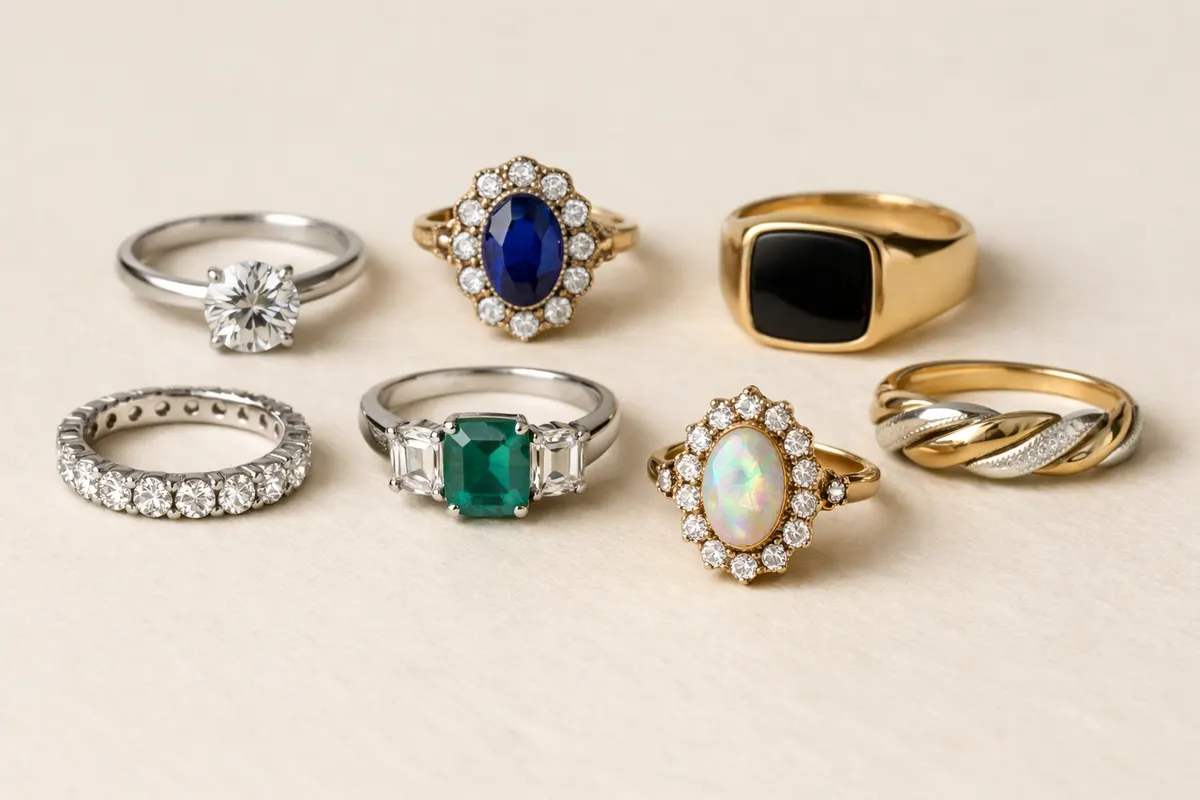
What “types of rings” means in jewelry identification
“Types of rings” is a practical way to sort ring forms by construction, purpose, and typical materials: engagement rings (solitaire or halo settings), wedding bands (plain or carved), signet and crest rings, cocktail or statement rings, eternity and anniversary bands, and fashion/stackable pieces. Each type attaches a set of visual expectations—common stones, bezel or prong settings, shank profiles and typical wear—that help narrow identification from a photo.
Beyond shape and purpose, type intersects with material (gold, silver, platinum, plated metals) and setting style (prong, bezel, pavé, channel). For example, a slim plain band may be worn as a wedding band, stacking ring or everyday ornament, while a raised central stone can appear in engagement, cocktail and other ring styles. Those combinations are what most photo-based checks use to make an informed statement.
Attribution should be cautious: a photo can often classify a ring’s type and flag likely materials or era indicators, but it cannot by itself prove maker, exact metal fineness, or gemstone authenticity. Use visible clues as a starting point for follow-up tests—hallmark checks, loupe inspection, and specialist appraisal—when value or authenticity matters.
- Types emphasize form and common function (engagement, wedding, signet, cocktail, eternity, stackable).
- Appearance + construction often imply likely materials but do not confirm them.
- Photos guide next checks (hallmarks, loupe, weight) rather than final appraisals.
How can you tell different ring types from photos?
Start with silhouette and setting: a solitaire with a raised central stone and four or six prongs typically reads as an engagement ring, while a low-profile band with inset stones in a channel is often an anniversary or wedding band. High-set multi-stone clusters or oversized centers usually indicate cocktail or statement rings.
Look for construction clues that photos reveal reliably: shank shape (flat, rounded, tapered), gallery details (openwork under the stone), presence of a bridge or under-bezel, and stone setting style. These elements are consistent markers—signet-style rings often have a broad face for an engraving, crest or stone, but their shank shapes and materials vary.
Check for hallmarks and stamps in clear close-ups of the inside shank. Common readable marks include numeric karat stamps (10K, 14K, 18K), silver marks (925), PLAT or PT for platinum, and maker’s marks or assay symbols. A visible stamp is strong photographic evidence of declared metal but not proof of actual fineness.
Use surface wear and patina as context. Gold-plated and vermeil rings often show base metal tone at edges, rubbing on high points, or blistering near settings. Heavy wear on prongs and visible solder repairs can suggest age or past resizing, which both affect typical resale expectations.
Simple at-home checks you can photograph: a clear macro image of the inside shank for hallmarks, a face-on photo to show setting type, and a profile shot to reveal gallery and shank thickness. If you suspect a gemstone lookalike, photograph with a bright white background and include a ruler or coin for scale; that helps experts and tools assess size, cut proportions, and likely identity.
- Silhouette and setting type: engagement vs wedding vs cocktail.
- Shank profile and gallery detail describe construction; they do not establish age or the wearer’s intended use.
- Readable hallmarks provide declared metal type but not proof.
- Edge wear, plating rub, and solder lines are visible signs of construction and repair.
Key facts at a glance for ring types
Use visible construction to describe a ring before deciding what it is made of. Style, material and purpose are separate questions: a solitaire setting does not prove a diamond, and a signet shape does not establish a precious metal.
The table summarizes what a photograph can contribute and where direct examination is needed. Record marks exactly, including surrounding letters and symbols, instead of translating an incomplete stamp into a definite claim.
| Attribute | Typical examples | Photo-checkable clues |
|---|---|---|
| Composition | Yellow/white gold, silver, platinum, costume base metals | Hallmarks (14K, 925, PLAT); surface color and base-metal exposure |
| Stone identity and durability | Glass, cubic zirconia, diamond and other gems have different properties | Appearance alone cannot establish identity, hardness or toughness; ask a qualified gemologist |
| Common marks | Karat stamps, assay marks, maker’s initials | Clear interior shank photos often reveal stamps |
| Typical settings | Prong (solitaire), bezel, pavé, channel, flush, cluster | Profile and face-on photos show setting type and prong wear |
| Care sensitivity | Plated metals: high; antique stones: variable; modern hard stones: more durable | Flaking, discoloration at edges, and stone looseness visible in close-ups |
- Separate the visible setting style from the unverified material.
- Do not scratch a stone or use destructive household tests to identify it.
What determines a ring’s resale value
A ring’s style alone does not support a price range. Value depends on verified metal content and weight, gemstone identity and condition, maker attribution, documentation and the market in which it is sold. A photograph can record visible marks and wear, but cannot supply all those inputs.
Keep asking prices separate from completed sales and from an actual offer for your ring. Even apparently similar rings can differ in stone treatment, repairs, weight or authenticity. This guide does not assign resale tiers or current dollar values from a photo.
Before seeking an appraisal or sale estimate, collect clear photographs and any receipts or existing laboratory reports. Record measured dimensions and weight only when you can do so safely. A jeweler or appraiser can explain which tests are needed and whether the requested valuation is for resale, insurance or another purpose.
| Value factor | Evidence to collect | What a photo cannot establish |
|---|---|---|
| Metal | Readable marks and measured weight | Actual fineness or whether a mark is genuine |
| Gemstones | Existing reports and detailed views | Identity, treatment, grading or origin |
| Maker and age | Marks, receipts and documented provenance | Authenticity or date from style alone |
| Condition | Visible wear, repairs and setting damage | Hidden damage or secure stone mounting |
- Verify materials and attribution before comparing prices.
- Use completed comparable sales with matching characteristics where available.
- State the purpose and date of a professional valuation.
What ring types are commonly mistaken for one another?
Certain ring types and materials produce similar photos and are frequently confused. A common pair is plated fashion rings versus thin solid gold bands: both can appear gold in quick photos, but plated pieces commonly show base metal at worn edges or inside the shank.
Diamond, cubic zirconia, glass and other simulants can look similar in photographs. Reflections, rainbow flashes or a crisp facet edge cannot establish which material you have. GIA explains that scientific measurements, rather than appearance alone, determine gem identity: https://discover.gia.edu/gialgdr. Laboratory-grown diamonds are diamonds; they are not the same category as diamond simulants.
Signet describes a form, not a guarantee of material or authenticity. Both precious-metal and costume pieces can have substantial profiles and detailed engraving. Photograph the face, sides and marks, then seek direct examination if attribution or value matters.
- Gold-plated vs solid gold: check inside shank for stamps and reveal of base metal at wear points.
- Diamond vs simulants: record appearance, then obtain appropriate gemological testing.
- Older rings vs reproductions: style and artificial patina can overlap; documented history and expert examination matter.
Care and handling
Choose a cleaning method only after identifying the metal, stones, treatments and construction. Until then, store the ring separately and avoid chemicals, heat, abrasives and ultrasonic cleaning. A jeweler can recommend care appropriate to the whole piece.
Older, treated, glued or fragile components may be damaged by otherwise routine cleaning. If a stone is loose, a prong is bent or an adhesive joint looks unstable, stop wearing the ring until it has been inspected. Hardness does not mean that a gemstone cannot chip.
If a photo shows visible dirt under stones, bent prongs, or lifting bezels, arrange an in-person inspection before wearing or selling. Repairs and secure re-tipping of prongs are normal maintenance and can meaningfully affect marketability.
- Store rings individually to prevent scratches, especially for softer stones.
- Avoid ultrasonic cleaning or soaking when the stones, treatments or adhesives are unknown; ask a jeweler first.
- Check prongs and settings periodically; photographs documenting condition are useful for resale.
Frequently asked questions
Can I tell if a ring is solid gold from a photo?
A photograph can show a stamp declaring gold content, but it cannot verify that declaration. PLAT or PT refers to platinum rather than gold. Have a qualified jeweler select appropriate tests for the piece; do not use an acid or scratch test on an unknown ring yourself.
How can I differentiate a cocktail ring from an engagement ring in pictures?
These categories overlap. A large decorative ring may be called a cocktail ring, while a ring given to mark an engagement can take many forms. Describe the setting, size and construction you can see; the wearer’s purpose cannot reliably be inferred from appearance alone.
Are vintage rings worth more than modern ones?
Vintage rings can be worth more when they carry designer marks, rare materials, or period craftsmanship that collectors prize. Condition, maker, and provenance matter most; a common vintage ring in poor condition often sells for less than a similar-quality modern ring in excellent condition.
What should I photograph to get a reliable online opinion on a ring type?
Take a face-on photo, a profile shot showing gallery and shank thickness, a clear close-up of the inside shank for hallmarks, and a scale reference (coin or ruler). Good lighting, focused macro detail, and multiple angles help experts and identification tools assess type, likely materials, and condition more accurately.
Related guides
Compare your ring to these photo clues with Jewelry Identifier
Use Jewelry Identifier at https://jewelry-identifier.app/tools/ring-identifier for a structured first look at visible ring features. Treat possible materials, age and attribution as unverified until checked appropriately. A photo result cannot replace a gemological examination or a professional valuation.
Take the next step →