

Jewelry Identification
Retro Jewelry: Identification, Value, and Real Examples
Use photo clues and practical checks to recognize retro jewelry, learn typical resale ranges, and see common lookalikes before a photo-based appraisal.
What is retro jewelry?
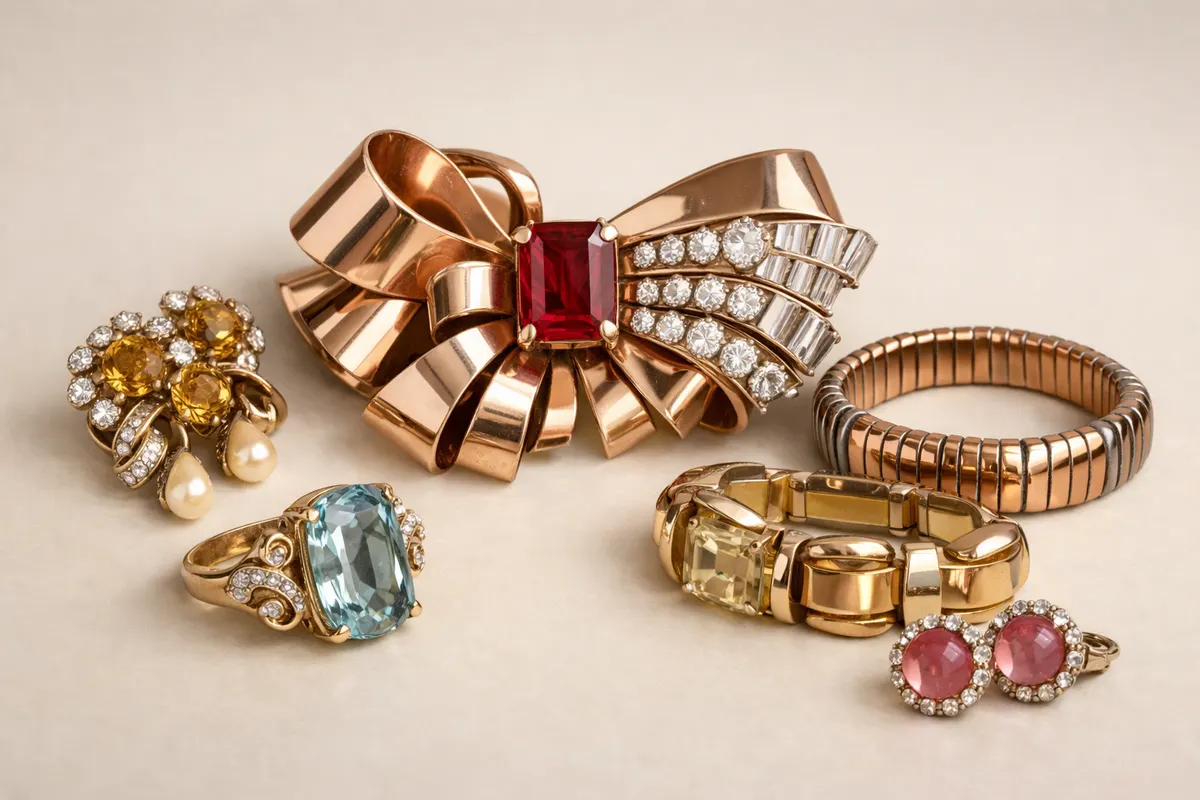
Retro jewelry generally refers to wearable pieces produced roughly between the mid-1930s and the 1950s, when wartime shortages and postwar tastes shaped bold, sculptural designs. Expect large, curving forms, warm rose or high-karat gold tones, oversized cabochons, and inventive use of nontraditional materials in both fine and costume lines.
Materials commonly found in retro pieces include 14k and 18k gold (often with heavy hand-tooling), gold-filled or rolled-gold plate for mid-market pieces, thermoset plastics like early phenolics, and glass or paste stones set as dramatic single centers. The look favors sculpted metal, broad links, and asymmetrical motifs inspired by Hollywood, machine aesthetics, and natural forms.
Retro pieces were made by a mix of small workshops and larger costume houses. Maker marks do appear — everything from stamped karat marks (10K, 14K) to recognizable manufacturer names on the back of brooches or clasps — but a maker name is not proof of age or authenticity on its own; construction, wear patterns, and materials must align with era expectations.
- Typical era: mid-1930s through the 1950s; overlaps with late Art Deco and early Modernist work.
- Visual signature: bold, three-dimensional shapes, broad curved surfaces, and large cabochons or sculpted stones.
- Materials: higher-karat yellow/rose gold, gold-filled pieces, early plastics, glass paste, and heat-treated or dyed natural stones.
- Context: both fine and costume makers produced retro styles; provenance and construction matter for attribution.
How can you tell retro jewelry from photos?
A photo-based identification of retro jewelry relies on observable construction details, hallmarks, and material clues rather than a single definitive test. Start by examining the overall silhouette: retro pieces favor weighty, molded or hand-shaped metal with wide, sculptural forms rather than the filigree and geometric repetition of earlier Art Deco work.
Look closely at clasps and link construction. Retro necklaces and bracelets frequently use wide box clasps, integrated decorative links, and heavy solder joints. Unusual clasp engineering (safety latches built into the design, sprung tabs) often indicates mid-20th-century manufacture rather than a modern reproduction.
Surface patina and wear tell a lot. Solid gold shows consistent color through wear; gold-filled or plated items reveal base metal exposure at high-contact edges. Thermoset plastics such as Bakelite show characteristic age crazing, a warm deep surface sheen, and can have color pills or oxidation that modern acrylics lack.
Magnified photos of hallmarks provide crucial clues. Stamped karat marks (10K, 14K, 18K), country assay marks, and clear maker stamps are photo-checkable evidence. If a maker name or logo appears, treat it as a lead: cross-check the style, expected materials, and known maker timelines before treating the stamp as confirmation.
- Silhouette: broad, rounded profiles; sculptural negative space rather than delicate filigree.
- Closures: box clasps, tongue-and-groove fittings, and integrated safety features common in 1940s–50s pieces.
- Wear patterns: consistent gold color for solid pieces; worn-through plating or exposed base metals on plated items.
- Marks: karat stamps, maker names, and assay symbols are photo-checkable but require contextual confirmation.
- Plastics: early thermosets (Bakelite/phenolic) show heat patina and density that differ from modern acrylics.
Retro jewelry — key facts at a glance
This compact specs table summarizes the usual materials, hardness, marks, settings, and sensitivities you can expect to encounter when evaluating retro jewelry. Use these attributes as a checklist when examining photos and when deciding which physical tests or expert checks to pursue next.
| Attribute | Typical retro characteristic | Photo-check cues |
|---|---|---|
| Composition | 14k–18k gold, gold-filled, plated base metals, glass, thermoset plastics | Warm gold color, visible base metal at worn edges, dense-looking plastics |
| Hardness & feel | Gold is soft and malleable; plated metals vary; thermoset plastics feel dense | Dents and tool marks in gold; flaking on plated surfaces; smooth, heavy-feeling plastic |
| Common marks | Karat stamps (10K, 14K), maker names, manufacturer symbols | Clear stamped numbers/letters on clasps or backs; inconsistent or modern fonts are red flags |
| Typical settings | Bezel-set cabochons, closed-back settings, integrated mountings | Closed pans under stones, broad bezels, no modern open pavé work |
| Care sensitivity | Susceptible to harsh chemicals, heat damage to plastics, abrasion of plated finishes | Discolored plastics, rubbed-through plating, solder joints visible on magnification |
What retro jewelry is worth
Secondhand values for retro jewelry vary widely: tiny costume brooches fetch low prices while signed solid-gold designer pieces can reach premium levels. The table below offers cautious resale tiers and the typical drivers that move a piece from one tier to another. These are market-observed ranges for resale on auction sites and vintage dealers, not appraisals.
Key value drivers are material (solid karat gold versus plated), maker and signature, condition and originality of stones or finishes, and desirability of the design. Provenance and accompanying documentation can move a piece upward, but a maker stamp alone does not guarantee high value without consistent material and construction evidence.
| Tier | Typical resale range (secondhand) | What drives value |
|---|---|---|
| Budget costume | $20–$150 | Unsigned base-metal or plated brooches, common mass-produced pieces, heavy wear |
| Collectible costume | $150–$600 | Signed costume houses (Coro, Trifari) in good condition, unique designs, era-authentic materials |
| Fine mid-range | $600–$3,000 | Solid gold or high-karat pieces, signed makers, original stones intact, good provenance |
| High-end / rare | $3,000+ | Designer or bespoke retro pieces in precious metals with documented provenance or rare materials |
Commonly confused with
Retro jewelry is most often confused with late Art Deco pieces, Victorian revival reproductions, and modern vintage-style reproductions. Photos can reveal key differences in construction, finishing methods, and material aging that help separate originals from lookalikes.
For example, true retro metalwork often shows hand-tooling marks, heavier gauge metal, and older solder joints, while modern reproductions may use machine-stamped parts, uniform finishes, and modern alloys. Costume pieces from the mid-20th century (by houses like Trifari or Coro) can look similar to unsigned modern costume but usually have different fastening methods and patina patterns.
- Bakelite or early plastics vs modern acrylic: check density, surface patina, and heat discoloration — thermosets age differently than thermoplastics.
- Late Art Deco vs retro: Deco favors geometric symmetry and filigree; retro uses sweeping curves and sculptural mass.
- Victorian revival reproductions: modern revivals often use laser engraving and perfect symmetry; period pieces show handwork irregularities.
- Signed costume vs unsigned lookalikes: maker stamps help but must match known period fonts and placement.
Caring for retro jewelry
Handle retro jewelry gently and avoid ultrasonic or steam cleaners unless you know the piece is solid metal and stable. Many retro pieces include glued stones, early plastics, or heat-sensitive adhesives that can be damaged by aggressive cleaning.
Store retro pieces individually to prevent abrasion of soft gold plating or paste stones. For early plastics and Bakelite, keep items away from high heat and prolonged sunlight to avoid color shifts and crazing. When in doubt, clean with a soft cloth and mild soap solution, and reserve chemical dips and abrasive polishing for pieces verified as solid metal by an expert.
- Avoid steam/ultrasonic cleaning for plated or glued constructions.
- Use a soft brush and mild soap for surface grime; dry thoroughly.
- Inspect settings before wearing; loose bezels and solder joints are common age issues.
Frequently asked questions
What years are considered the retro jewelry era?
Retro jewelry typically refers to pieces made from the mid-1930s through the 1950s. The era overlaps the late Art Deco movement and early modernist approaches, producing bold, sculptural silhouettes driven by wartime materials limits and postwar tastes.
Can I identify retro jewelry from a single photo?
You can surface strong clues from a single well-lit photo — silhouette, setting style, visible hallmarks, and wear patterns — but one photo rarely proves age or authenticity. Multiple angles (backs, clasps, marks, close-ups of joins) and material tests provide the contextual evidence needed for confident attribution.
How do I tell vintage Bakelite from modern plastics in photos?
Bakelite and other early thermoset plastics often display a dense, slightly warm surface sheen, characteristic crazing or fine surface checks, and deep color saturation. Modern acrylics usually look lighter, show uniform color, and lack heat patina. Close-up photos that show edge behavior, drill hole color, and any surface crazing help a lot.
Is retro jewelry likely to be valuable?
Some retro pieces are collectible and resale values vary widely. Value depends on material (solid gold vs plated), maker and signature, condition, rarity, and current market demand. Use the provided value tiers as a starting point, and treat any photo-based estimate as provisional until a physical inspection or specialist appraisal is done.
Related guides
Compare your piece with Jewelry Identifier
If you’ve checked the visible clues above and want a first-pass comparison, use the Jewelry Identifier tool to compare a photo of your piece against retro-era characteristics. Treat results as an evidence check rather than a final appraisal: the app helps highlight matching clues (marks, silhouettes, and materials) and suggests next verification steps such as physical testing or a specialist appraisal. Try the first-pass comparison here: https://jewelry-identifier.app/tools/jewelry-identifier.
Take the next step →