

Art Deco Jewelry: Geometry, Materials, and Design Clues
Learn which photo clues reliably indicate art deco jewelry, which signals are weaker, and the comparison steps to check before you trust a visual ID.
Quick answer: What photos can show about art deco jewelry
Photos can reveal a surprising amount about whether a piece is likely art deco jewelry, but one image rarely gives certainty. Consistent geometry (bold, symmetrical lines), construction details (openwork metal, soldering style), and typical materials (platinum frames, early synthetic stones) are the strongest visual signals you can check in a phone photo.
Conversely, surface color or a single close-up of a stone can mislead: plating, later repairs, and modern reproductions copy the look without the period construction. Treat any photographic identification as a hypothesis you will confirm with maker marks, provenance, or a hands-on appraisal for high-value pieces.
Start by photographing the whole piece, then focused details: clasp or pin mechanism, stone-setting style, any hallmarks, and the reverse or inside. Those images together are much more useful than a single pretty shot of the front.
- Most useful: overall geometry, setting style, and fastener/clasp details.
- Moderately useful: coloration of metals and stones when combined with other clues.
- Weak alone: a single close-up of a stone, a filtered photo, or an image with heavy glare.
- Next step: collect 4–6 clear photos (full view, reverse, clasp, close-ups of settings and marks) before drawing conclusions.
Strong visual clues for identifying art deco jewelry
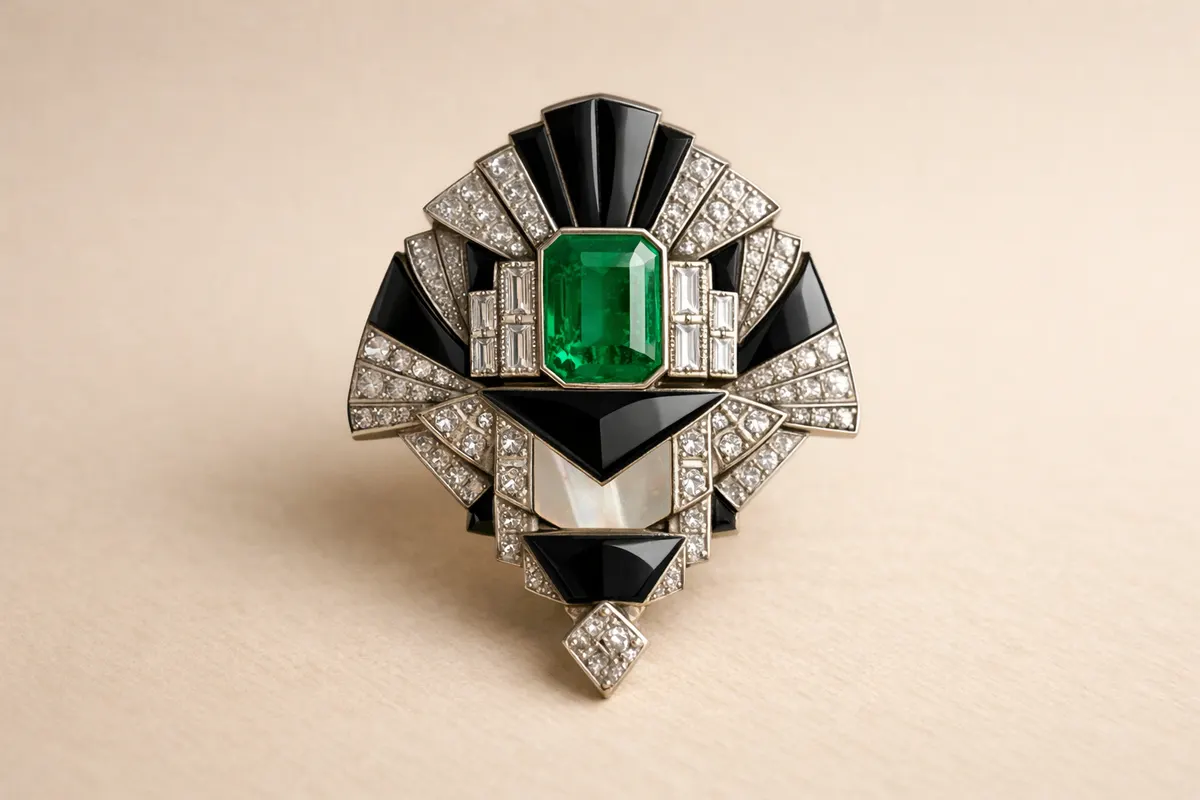
Art deco jewelry has signature geometry you can often spot from a normal phone photo. Look for hard-edged symmetry: stepped forms, sunbursts, chevrons, and long rectangular motifs rather than the flowing curves of earlier Art Nouveau work. Architectural references—skyscraper-like layering, fan motifs, and repeating chevrons—are reliable era indicators when combined with other features.
Construction and setting techniques survive photography well and are stronger clues than color alone. Fine milgrain around bezels, closed-back settings for early paste stones, tubed prongs for tiny step-cut diamonds, and the use of multiple small stones in linear channels are all typical. Platinum was widely used for its strength with delicate settings—photos showing very fine, secure prongs or filigree in an unbent metal plane point toward that metal and period style.
Fasteners and clasps are particularly diagnostic. For example, the trombone or 'safety' clasps and certain box clasps with figure-eight catches appear on many 1920s–1930s necklaces and bracelets. Brooch backs that use C-clasps and long pin stems with external hinges suggest earlier pieces; paintings or repairs that hide the original hinge can complicate interpretation, so examine the reverse carefully.
Wear patterns on the underside and edges can also indicate genuine period use. Consistent, even wear (softened edges on high-contact areas, slight darkening in crevices) supports an older object; isolated heavy wear with modern solder joints or inconsistent patina may point to alterations or later assembly.
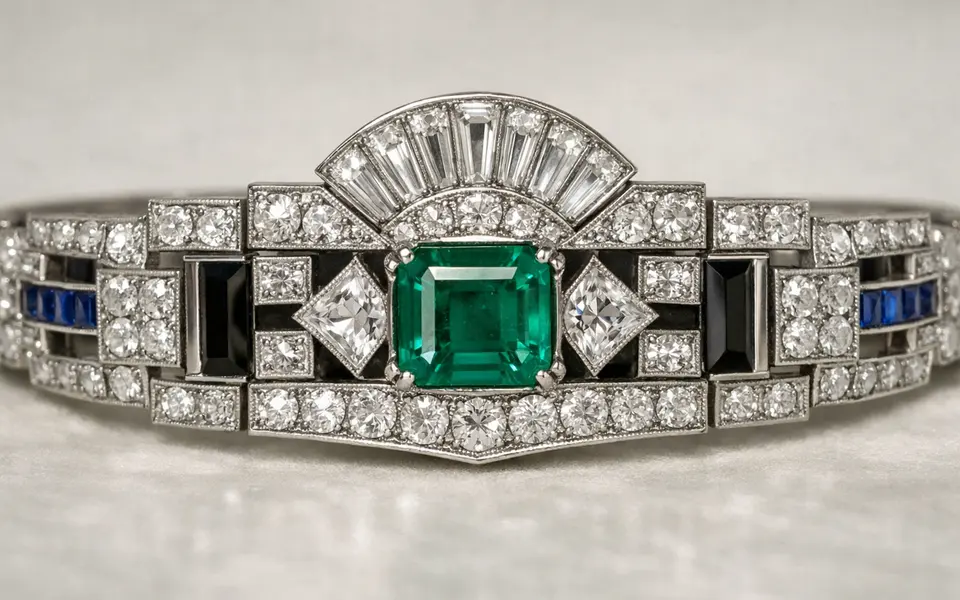
- Geometry: stepped symmetry, chevrons, sunbursts, and long horizontal lines.
- Settings: millegrain, tubed prongs, closed-back paste settings, and channel-set rows.
- Metal clues: exceptionally fine prongs/filigree suggest platinum-era construction.
- Fasteners: period clasps, external hinges, C-clasps or early safety catches are telling.
- Wear: consistent patina and edge-softening support age; mismatched wear suggests repair.
Weak signals and common lookalikes for art deco jewelry
Some visual features tempt readers into false identifications. Bright color alone—whether a vivid turquoise, strong blue, or intense red—can be reproduced in modern fashion jewelry or later restorations. Many contemporary designers and mass-market manufacturers copy Art Deco motifs without period construction, so color or a generic geometric look should be treated as weak evidence when seen by itself.
Glaring reflections, heavy image filters, and poor lighting can hide critical setting details. For instance, a photo that washes out prong profiles won’t let you see whether prongs are delicate tubed types (a stronger clue) or thick modern prongs. Similarly, one angle rarely reveals clasp type or internal solder work; those require shots from multiple directions.
Common lookalikes include Retro-Revival pieces from the 1940s–50s that borrow Deco geometry but use larger, chunkier metalwork and different joining methods, and modern costume jewelry that mimics Deco shapes but uses base metals and glued settings. Beware of reproductions sold as 'in the style of' without clear documentation.
- Color alone: vulnerable to reproduction and stone replacement.
- One-angle photos: hide clasps, soldering, and prong detail—need multiple views.
- Modern copies: similar geometry but different metal thickness, solder lines, and setting quality.
- Filters and glare: can mask millegrain, tiny prong shapes, and hallmarks.
A step-by-step comparison workflow for likely art deco pieces
Start by assembling a dossier of photos: full front, full back, close-ups of the clasp or pin back, detail shots of settings, and any visible hallmarks or inscriptions. Place those images side-by-side with high-quality reference photos of confirmed art deco jewelry examples—museum pieces, auction listings with provenance, or reputable reference books. Looking across the same views (front vs. front, reverse vs. reverse) helps you compare construction, not just appearance.
Next, score each clue rather than forcing a binary decision. For geometry, give 0–3 points for match quality; for construction (prongs, settings), 0–3; for fasteners/hallmarks, 0–3. A combined score helps you weigh multiple moderate clues over one dramatic but weak signal like color. For instance, a piece that scores high on geometry and construction but low on hallmark evidence still warrants further investigation rather than immediate dismissal.
When you find near-matches, dig into maker and trade clues. Repeating patterns of tiny millgrain, edge filing marks, or specific clasp forms sometimes point to known workshops or regions. Use auction catalogs and museum collections as comparators—images with detailed captions that include materials and manufacturing notes are especially useful.
If the visual comparison leaves doubt, the safe next steps are non-destructive testing and provenance checks: have hallmarks examined under magnification, request paperwork from the seller, and consult a trusted appraiser for high-value items. Online tools and photo-based ID apps can accelerate the comparison but treat their results as first-pass leads to verify.
- Collect comparable photos: match the same views for side-by-side comparison.
- Score clues across categories (geometry, setting, fasteners, hallmarks) to balance evidence.
- Check maker-style details: specific millegrain, filing patterns, or clasp types.
- When in doubt, prioritize hands-on hallmark checks or a professional appraisal.
How to use Jewelry Identifier after checking art deco clues
After you’ve gathered multiple photos and run the visual checklist, use Jewelry Identifier as a structured first pass to surface similar images, era clues, and possible maker marks. Treat the app’s suggestions as research notes rather than a final verdict; it speeds comparison across image databases but cannot replace physical hallmark testing or provenance verification.
Open the app with a set of clear images: full view, reverse, clasp, and close-ups of the setting. On iOS, the app can highlight likely matches and list similar-looking items with brief provenance notes when available. Use those matches to expand your reference set—look for repeat details such as identical clasp forms or a unique setting style that appear across multiple confirmed examples.
If the app suggests candidate matches, review them critically against your checklist. Confirm whether matching examples share construction details (not just shape or color). If the app proposes an era or material, cross-check that claim with hallmark photos and the clasp/setting evidence you documented earlier.
Finally, be prepared to follow up offline for high-value or uncertain items. Jewelry Identifier’s output is most valuable when it guides targeted questions for an appraiser or when it helps you assemble provenance for a sale. For readers wanting a deeper primer on visible checks before accepting an app result, our guide on how to tell if jewelry is real offers practical non-destructive checks and next steps.
- Upload a set of well-lit photos (full view, back, clasp, setting close-ups) into the app as a single comparison session.
- Treat app suggestions as leads: verify matching construction details, not just silhouette.
- Use app matches to locate auction lots or museum examples for provenance clues.
- If you plan to sell or insure, follow app leads with hallmark verification or an in-person appraisal.
Related guides
Try Jewelry Identifier as your visual research step
After you photograph multiple views and run the clue checklist, use Jewelry Identifier on iOS to surface similar images and candidate matches. Treat results as research notes: confirm hallmarks, check fasteners and setting construction, and consult a trusted appraiser for high-value pieces before relying on an identification.
Take the next step →Frequently asked questions
What geometric features most reliably indicate art deco jewelry?
Look for strong symmetry and stepped or angular motifs: chevrons, sunbursts, zigzags, and long horizontal bands. These forms were often inspired by architecture and industry. When those shapes appear with fine setting techniques—tiny millgrained edges, channel-set rows of stones, and consistent, delicate prongs—they form a stronger case for an Art Deco origin than shape alone.
Can color or stone type prove a piece is art deco jewelry?
No—color and stone type are weak proofs on their own. Early Deco pieces used natural stones, early synthetics, and paste, but modern makers reproduce those palettes. Color is useful only when it appears alongside period construction and fasteners. For example, a bright emerald-green glass cabochon in a closed-back setting with period clasps is more convincing than the same stone set in a modern glued mount.
How can I tell if a clasp or hinge points to a 1920s–1930s date?
Study the clasp type and hinge construction: certain box clasps with figure-eight safety catches, external pin stems, and long thin hinge bars are common in the 1920s–30s. Platinum-era pieces often show finer solder seams and tiny, precise hinges. Compare the clasp to dated examples in auction catalogs or museum records; those sources can confirm when a specific clasp form was fashionable.
If Jewelry Identifier suggests an art deco match, is that proof?
No—an app suggestion is a useful lead but not definitive proof. Use the match to gather more evidence: look for consistent construction details, search for hallmarks under magnification, and obtain provenance or paperwork if available. For high-value items, finish with hands-on hallmark verification or a certified appraisal before making buying or selling decisions.